Showing posts with label celebrities project. Show all posts

Thursday, January 5, 2017

Celebrities Project: Bing Crosby

It has been fun thinking about Bing Crosby and listening to Bing Crosby music over the past several weeks, especially since I associate him so closely with the holiday season. I also liked learning about how he was from Spokane and I hope to visit the Crosby home the next time I drive out that way. This childhood home has a very different look and aesthetic to the mid-century home that Bing owned in the Coachella Valley area of California!

Today is also an interesting day to start writing this post, since January 4th marks the 74th anniversary of when the Bing Crosby home at Toluca Lake caught fire, due to a dry Christmas tree. I'm glad that I packed my Christmas decorations away yesterday!

In order to understand Bing's life and career beginnings better, I decided to read Bing Crosby: Pocket Full of Dreams, 1903-1940 by Gary Giddins. Like so many of the autobiographies that I have read this year, this one also meandered to discuss the lives of the people who interacted with Bing. Luckily, though, these tangents were a lot less lengthy than the ones that I've encountered in other biographies. This book helped me to understand more about the importance of technology in Bing Crosby's life: he really was born at the the right time for a mellow baritone voice to become famous, due to the invention of the radio (airwaves favors lower, resonant voices), the microphone, and the rise of sound recording technology. If Bing Crosby were born at a different time, without these inventions, he and his voice might not have made a great impact on popular culture.

Bing had a very prolific career, so I chose to focus on a few key points of his career in music, radio, and film. It was fun to listen to his voice, because his low tones and bright, controlled whistling remind me of my Grandpa T. One song that I particularly enjoyed discovering was "Whistling in the Wildwood." The subject matter reminds me of J's Grandpa P, and I learned from my mother-in-law that Grandpa P also was a whistler too. So it's fun to listen to this song and think of two different grandpas at the same time:


I also had my kids listen (and dance!) to Bing Crosby's Jingle Bells duet with the Andrews Sisters. I showed Lucy a clip of Sam dancing to this music when he was her age, and she was inspired to dance around too. I was surprised to learn that Bing never really formed a friendship with the Andrews Sisters. They had a strictly professional relationship and wouldn't really communicate outside of the studio. This is surprising to me, since their duets are some of the most well known and commercial recordings from Bing's career!

One of the ways in which Bing became extremely popular was through his work as the radio host for the Kraft Music Hall show. These radio shows were written out verbatim, but Bing's delivery is very natural and casual. I decided to listen to one excerpt of the show, in which eighteen-year-old Donald O'Connor is the guest (especially after learning that Bing worked with Donald O'Connor when he was twelve years old, during the 1938 film Sing You Sinners).


Over the past few several I've seen a few films with Bing Crosby (High SocietyThe Country Girl, and Robin and the Seven Hoods), simply due to the other actors that I've been studying.  There still were many films to choose from, though, so this month I watched these Bing Crosby films:

  • Going My Way (1944): I've seen his movie before, but I could remember much about it. I decided to rewatch it, though, because Bing won an Oscar for Best Actor. To be honest, though, I felt like the film was slow-going (and Barry Fitzgerald's jittery character wore on my nerves).
  • Holiday Inn (1942): This is a fun film that also has some great comedic moments between Bing Crosby and Fred Astaire. It's fun to see Bing Crosby sing "White Christmas" in this holiday film, too. I think I enjoyed this film the most, next to Road to Morocco.
  • Road to Hollywood: This documentary is a "bonus feature" on one of the DVDs that I own, but I never watched it before. The 1947 film purports to discuss the rise of Bing Crosby to fame in Hollywood, using a string of short subject films that Bing created in 1931. This compilation seems rather haphazard, though. It's rather boring, and the audio is very poor in the early films. I don't think I'll watch this again!
  • Road to Morocco (1942): I had a hard time deciding which "Road" movie to choose, but this blog post ranked the series and said that they thought Road to Morocco was the best. I've seen it before, but it had been a long time. It was quite funny and enjoyable, and I loved tons ee Bing's comedic timing. (The biography I read emphasized that people who personally knew Bing felt like the "Road" series best captured his true persona.)  J even watched this film with me and laughed several times. My favorite line is when Bing and Bob Hope are walking through the desert, and Bop Hope ad libs, "This must be the place where the empty all of the old hour glasses."
I also have been really saddened by the recent news of Debbie Reynolds and Carrie Fisher's deaths, so I specifically sought out video clips of Say One For Me (1959), in which Bing Crosby and Debbie Reynolds perform together:


This song The Secret of Christmas is a little hokey with Debbie Reynolds singing next to the television screen projecting Bing's image, but it is still cute to see them singing "together":


I also was able to learn a little bit about Bing Crosby's connection to art history, which I covered on my art history blog, not only with his art collecting but also his Stagecoach portrait by Norman Rockwell. I feel more connected with him, knowing that he was interested not only in art, but also in reading. He was well spoken and intelligent. I also admire that he was a hard worker: he liked to fill his daily schedule and make sure that he was on time (if not early!) to his appointments. I can relate to having or desiring those traits!

Because I got behind on this project, I wasn't able to learn about Billie Holiday or Frank Sinatra before 2016 ended. I hope to learn about them sometime this year, but I don't think that I'll undertake a similar project for 2017. I'm ready to stop readying biographies and enjoy some fiction! My only goal for 2017 this far is to finish up my celebrities project at some point. I'm drowning in books that I've put aside for this project, and it will be nice to read some of them this coming year.

Wednesday, December 14, 2016

Bing Crosby Facts and Statistics

As I've been learning about Bing Crosby, I've been reading Bing Crosby: A Pocketful of Dreams - The Early Years 1903-1940 by Gary Giddins. Here are a couple of facts that I've learned:

  • Bing Crosby received a classical Jesuit education at Gonzaga High School and Gonzaga University. He is the only major singer in American popular music to receive a classical education.
  • Bing Crosby didn't know how to read music, but he had an amazing audiographic memory and could memorize and sing back anything that was played for him.
  • "In a national poll conducted in the late 1940s, Crosby was voted the most admired man alive, ahead of Jackie Robinson, Generals Eisenhower and MacArthur, Harry Truman, Bob Hope, and the Pope." (Loc. 174-175, Kindle version).
  • "He was the first full-time vocalist ever signed to an orchestra"(Loc. 209-213, Kindle version).
  • "He made more studio recordings than any other singer in history (about 400 more than Sinatra)" (Loc. 209-213, Kindle version).
  • "He made the most popular record ever, "White Christmas," the only single to make American pop charts twenty times, every year but one between 1942 and 1962" (Loc. 209-213, Kindle version).
  • "He scored the most number one hits ever, thirty-eight, compared with twenty-four by the Beatles and eighteen by [Elvis] Presley" (Loc. 216, Kindle version).

Tuesday, November 8, 2016

Celebrities Project: Marilyn Monroe


I finished my Marilyn Monroe Month (as part of my Celebrities Project) several weeks ago, but I haven't had the motivation to write a recap of my experience here. The truth is, it was terribly depressing to learn about Monroe. What a sad life she led! She never really had a loving home when she was growing up: her mother was mentally unstable and Norma Jean Baker was passed around between foster homes until she was essentially placed in her first marriage by her foster parents. Really, it seems like Marilyn didn't really have close friends throughout her life. She was always surrounded by people, but many of those people didn't care about her as an individual.

I started off by reading My Story by Marilyn Monroe (with Ben Hecht). This autobiography was written only up to a point: the manuscript stops abruptly just after Marilyn goes on her honeymoon with her second husband, Joe DiMaggio. The abrupt ending was fitting in a way, since Marilyn's life also ended so abruptly.

In some ways, it was nice to pair this autobiography with Anthony Summer's book Goddess: The Secret Lives of Marilyn Monroe. Although this book was interminably long and repetitive, I did like that Summers tried to help distinguish what was fiction and fact in Marilyn's My Story. Perhaps unsurprisingly, this dramatic actress had the propensity to embellish and exaggerate events of her life. The book's main argument is that Marilyn actually didn't commit suicide, but that she may have wrongfully died due to her compromising affairs with the Kennedy brothers (specifically Robert). There are a lot of suspicious things about the circumstances of her death, including the fact that she was discovered with a phone received clenched in her hand (which typically would not happen if someone had overdosed on sleeping pills, which prompts the hand muscles to relax and drop things before rigor mortis sets in). Regardless of what really happened, it is certain that she had a sad ending to her life: she was mentally and emotionally unstable during the last months of her life, and didn't get the help that she needed to overcome her addictions and problems.

I obviously picked the wrong movies to watch, too. I decided to skip watching the shows that I have already seen and enjoyed, so I didn't see shows like How To Marry a Millionaire (I really love her comedic timing in this show), Gentlemen Prefer Blondes or The Seven Year Itch. Instead, I saw Monkey Business (1952) with Cary Grant, in which Monroe plays a secretary that gets involved with a scientist who has discovered a formula which makes people youthful. The film was okay, but it was a little too silly and long, and I didn't think Monroe's comedic timing was that great in this show.


I also saw The Misfits (1961), in which Monroe plays opposite Clark Gable and Montgomery Clift. This movie was really slow paced and not that interesting for the most part, except for one scene at the end of the movie (at 2:16 - 2:21 in this online video). Seeing Marilyn get so upset and scream so loud was so unexpected for me that it was really poignant. It was also interesting to just know that this movie was written by Arthur Miller (Marilyn's third husband, although their marriage was breaking down at the time this was filmed). Marilyn also had an obsession with Cary Grant (she imagined that her estranged father looked like Cary Grant), and so it was interesting to see them play together. Cary Grant died soon after this film was completed.

The movie that was most interesting to watch was the unfinished film of Something's Got to Give (1962) with Dean Martin. This was the last movie that Marilyn started to make before she died, and she was so unstable and unprofessional that she ended up getting fired from the set. She looks unhealthily skinny to me in this film, but perhaps I also had that reaction because I knew of all of the problems she was experiencing with insomnia and alcohol at the time. There are some funny moments in this unfinished film, though, and I did like to see Dean and Marilyn play opposite each other.

I'm realizing in this Celebrities Project that I don't personally connect with many of these celebrity figures, including Monroe. I guess I must have hoped to connect with these figures more, which is perhaps why I've been a little disappointed with the people that I have been studying lately. I do like that Marilyn Moroe loved learning (even though she didn't have the best formal education herself); I enjoyed discovering that she decided to take a university-level art appreciation class 1951, after she decided that she wanted to be more cultured. I also like that she collected art and loved to read. But beyond those points, it was hard to connect with someone who lived so out-of-touch with reality and who desperately craved attention. I'm just not that kind of person!

UPDATE 4/24/22: Someone on Twitter posted this picture of a rose that was painted by Marilyn Monroe in 1962. It is fun to know that she was interested in making art on her own:

Saturday, September 17, 2016

Celebrities Project: Fred Astaire


If I had known what a prolific career Fred Astaire had, I think that I would have devoted two months to studying his work. Interestingly, I didn't feel like there was much to learn about his personal life (especially after coming off of learning about Louis Armstrong, who had such a dramatic and often turbulent life). It seems like Fred can be summed up in a few ways: he liked golf, horses, English fashion; he was a quite cautious person by nature, and he was a perfectionist when it came to his dance routines.


Probably the most interesting thing that I learned this month was that Fred had a long stage career with his older sister Adele (shown above). I read about an interesting biography dedicated to their work together: The Astaires: Fred and Adele by Kathleen Riley. They began taking intensive dance classes when they were children (about four and six years old) and they performed together into adulthood. Adele was really popular with the critics, and it seems like she was considered to be the more talented entertainer out of the brother-sister team. The team ended in 1932, when Adele left the stage to marry Lord Charles Cavendish. More information about Adele is in her obituary, and I posted an interesting anecdote about her on my art history blog. Although we don't have any film recordings of her performing, I do think it's interesting that her singing voice reminds me a little bit of Ginger Rogers's voice.

Fred and Adele Astaire in 1906

Another thing that was interesting to me about Fred Astaire was that he was close friends with George Gershwin. The two worked together so well, especially musically-speaking, that Alexander Woolcott wrote in 1927: "I do not know whether George Gershwin was born into this world to write rhythms for Fred Astaire's feet or whether Fred Astaire was born into this world to show how the Gershwin music should really be danced. But surely they were written in the same key, those two" (New York World, 23 November 1927).

These are the Fred Astaire films and clips that I saw over the past few weeks:
    • The Gay Divorcee (1934): This was fun to watch, because I watched it with my Grandma and my sister. It really is quite a funny show, and we found ourselves laughing quite a bit. This was the second show that Fred performed with Ginger Rogers. The Cole Porter song "Night and Day" is in this film, and it's fun to hear Fred sing that.
    • Flying Down to Rio (1933): This was the first film that Fred Astaire created with Ginger Rogers. They both had secondary roles in the movie, and honestly, it was a slow-paced film that dragged quite a bit. And only some of the speakers were authentic Brazilians, but I guess that's an unrelated issue...
    • Easter Parade (1948): Apparently, Gene Kelly was supposed to do this film, but he broke his foot by stomping after he lost a volleyball game. Gene recommended Fred for the film. I was really impressed with Judy Garland's comedic timing, more than anything. 
    • Daddy Long Legs (1955): There is some fun dancing in this film, and I personally like th opening scene when there are a lot of iconically-styled portraits (in the manner of Whistler or Sergeant, for example) created with Fred Astaire's likeness. Fred does seem quite old to be paired opposite such a young actress, but he mostly pulls it off alright.
    • I also watched an interview with Ginger Rogers from 1968, in order to get a bit more of an outsider perspective on Fred Astaire. She tells a delightful story about how they spontaneously planned to dance for a moment on stage at the Academy Awards in 1967 (see video clip), which was fun.

All in all, I think that I had a mixed response to Fred Astaire Month. His dance routines were entertaining and fun, but I realized after a few films and video clips that I had a pretty good sense of his style. I didn't feel a compulsion to keep watching his films for enjoyment, but more so out of responsibility to this project. I did enjoy reading about his work with his sister, though, and I feel like I have a fairly good sense of who he was as a person and as a performer.

Unusual Fred Astaire Dance Routines

It is taking me longer to go through Fred Astaire material than I thought! I didn't realize how many films Fred Astaire made during his prolific career: he created around 35 movies during his career, and this is surprising considering that he really entered Hollywood when he was around 34 years of age.

In Fred Astaire's obituary in the NY Times, I found a list of some of the more unusual dances that Fred did during his career. I think that these are really fun to watch because they show off his dancing ability and also his ability as an entertainer.

Fred Astaire dances on the ceiling in "You're All the World to Me" from Royal Wedding (1951):


Fred Astaire and Ginger Rogers danced on roller skates in "Let's Call the Whole Thing Off" from Shall We Dance (1937). I think it's especially fun to hear this song, since Fred and Ginger also sing this song, which was written by the Gershwin brothers.


Fred Astaire and Rita Hayworth dance on top of a wedding cake in "You'll Never Get Rich":


And Fred Astaire dancing while hitting golf balls off of a tee in "Carefree":


And, although this isn't an unusual set or premise for a dance routine, I thought I would include this clip of Fred Astaire and Gene Kelly dancing together (from "The Babbit and the Bromide"), since you don't always see these two mega-star male dancers appearing side-by-side. It's interesting to see them dancing together and notice how differently their bodies are formed: Fred seems lanky and tall next to Gene Kelly (which is funny because Fred was only 5'9" tall).

Sunday, August 14, 2016

Celebrities Project: Louis Armstrong


I finished my study of Louis Armstrong last week, when I finally finished reading the informative, yet tedious, book Louis Armstrong: An Extravagant Life by Laurence Bergreen. but I haven't had a chance to write because we have been at the Weber. In some ways, I struggled with learning about Louis Armstrong, simply because I couldn't really relate to much of his life or his interests outside of music. I was surprised to discover how much I seek to relate to these celebrities when I have been learning about them, which must indicate something about how I learn or what type of connections I find meaningful. One thing that I really did admire about Louis is that he was an extremely generous person. It is easy to tell that gift giving was his "love language," since he loved to gift expensive items and money to the people that he cared about.

Some interesting things that I learned:
  • Louis always pronounced himself as it is spelled ("Lou-is") not "Louie." He also went by the nicknames "Satchelmouth" and its abbreviated form "Satchmo." The names referred to when he use to hold coins in the side of his mouth while playing, to ensure that no one would steal the money that was being given to him while he played.
  • Outside of music, Louis was passionate about laxatives and marijuana. He was such a fan of the laxative Swiss Kriss that he would give cellophane-wrapped packets to everyone he met: journalists, diplomats, fellow musicians, etc. In fact, you can purchase Swiss Kriss in the gift shop of the Louis Armstrong House Museum.
  • Louis Armstrong had four wives, not to mention numerous affairs on the side. It also appears that he fathered an illegitimate daughter, news which was just made public about four years ago.
  • One of the most influential moments in Louis Armstrong's life was when he was sent to a juvenile detention center as a young boy. During Mardi Gras, he decided to take his stepfather's gun and shoot it off in the air during the celebrations. When authorities caught Louis with the gun in his possession, he was placed in jail and then moved to the detention center.  As a poor black boy in New Orleans, he wasn't given a chance to be proven innocent. However, this time in the center really changed his life and helped introduce him to more formal instruction in music.
  • One of the main reasons that Louis Armstrong would stop and sing during his musical numbers was simply out of necessity: he needed to give his embouchure a break from all of the tension and pressure that it sustained during trumpet playing!
  • Louis Armstrong even created an album of Disney songs: Disney Songs the Satchmo Way
It was easy to segue into Louis Armstrong performances this month, since I saw his appearances in the film High Society during last month (when I focused on Grace Kelly). The other shows that I watched were Hello Dolly (1969), The Glenn Miller Story (1954), A Song is Born (1948), and The Five Pennies (1959). In several of these movies, I didn't really feel like I got a great sense of Louis Armstrong as a performer, since his appearances were short (and he really just seems to serve a more secondary, even caricatured, role as a black entertainer in order to support the white leading actors). But I do think that his energy, personality, and love of music are apparent in this rendition of Danny Kaye and Louis Armstrong singing "Oh When the Saints Go Marchin' In" from The Five Pennies:


Another sweet scene from The Five Pennies is when Louis Armstrong, Danny Kaye, and the child actress Susan Gordon perform a trio medley. The person who posted this video mentioned how these people are all very different and from different backgrounds, but they are brought together by music.

This month I also watched Louis Armstrong: The Portrait Collection, which included some televised performances of Louis Armstrong and Velma Middleton. Their interactions are entertaining (such as in the performance of "That's My Desire"). One of my favorite television performances, though, is when Louis Armstrong and Frank Sinatra sing "The Birth of the Blues" together. Frank's singing is actually rather bland here, I think (and really is only kept lively through Louis's trumpet playing), but the thing that I live is that Frank is genuinely jamming when Louis starts singing at about 1:16:


I read that Louis Armstrong never made great friendships with the wealthy white entertainers within Hollywood, but they did seem to respect and greatly admire his musicianship and showmanship. And I feel the same way: although I don't feel like I have a great connection with Louis Armstrong's personal history, I really respect the way that he could move his audiences. His rendition of What a Wonderful World is such a inspiring, heartfelt song.

Monday, July 4, 2016

Celebrities Project: Grace Kelly

Andy Warhol, Grace Kelly, 1984. Screen print in color. This print was created two years after Grace Kelly's fatal car accident.

I have really enjoyed Grace Kelly month, not only because she was an interesting person, but I also felt like there was a manageable number of films to watch (see post on her films HERE)! I also enjoyed learning about her interest in created pressed flower collages, and I'm glad that her creativity found a way to manifest itself in a visual form (see my post on her collages HERE).


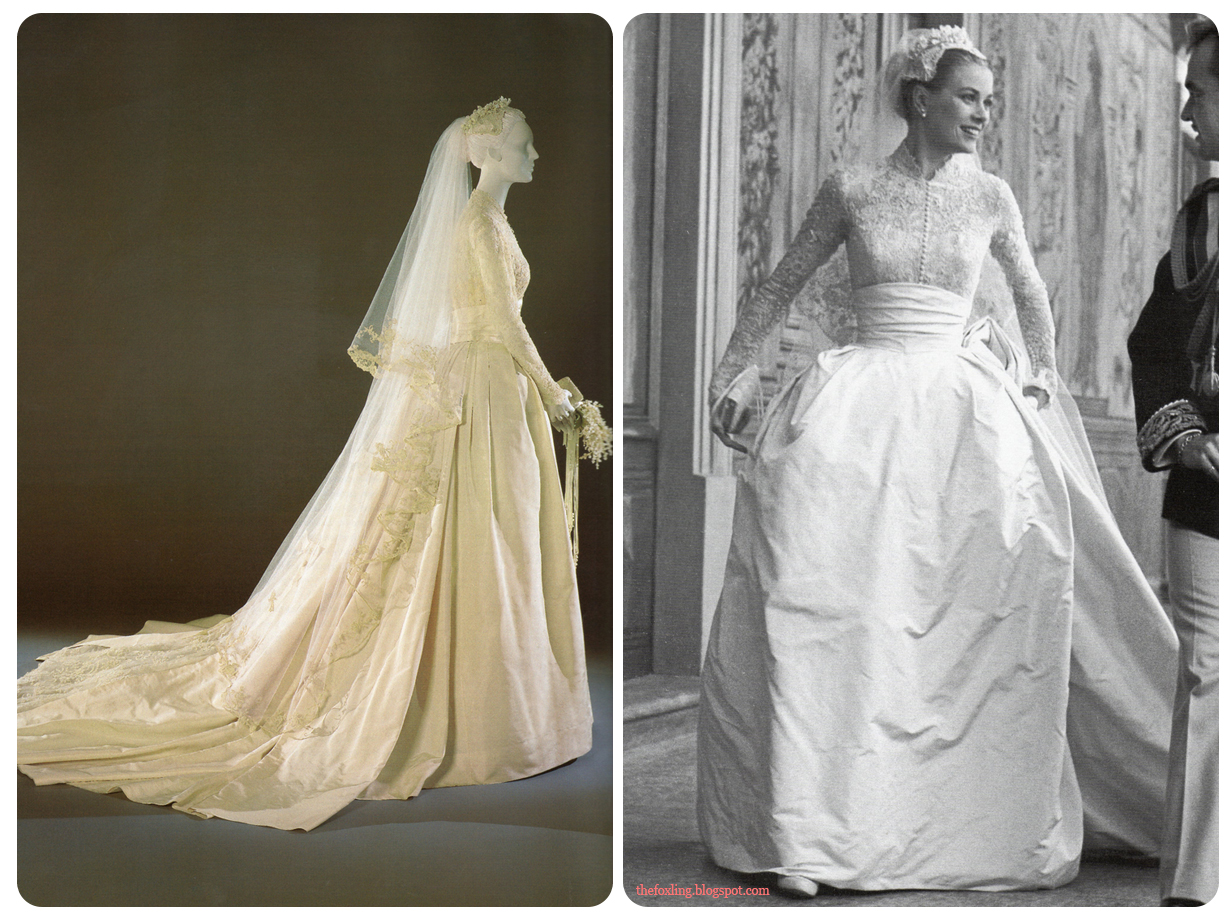
I think Grace Kelly is a very classy and tasteful person, and I've really enjoyed following her sense of fashion in the exhibition catalog for Grace Kelly - Style Icon show at the V&A museum in 2010. I personally prefer the clothes that she wore in the 1950s and 1960s. I love her wedding dress though, especially with the detail of the row of small buttons that extends from her neckline to her waistline. However, I think she was a victim of the times when it comes to the fashion of the '70s and '80s, and some of her outfits (like this one or this one) are a little too gaudy for my taste, as well as her overly-elaborate hair coiffures

Grace Kelly and Audrey Hepburn backstage at the 28th Academy Awards on March 21, 1956

As I learned about Grace Kelly this past month, I thought of a lot of parallels between these women.  (No doubt I was influenced in making parallels because I read Donald Spoto's biography on Grace Kelly, and I had also read his biography on Audrey Hepburn a few months ago.) Not only were they fashion icons, but they also had similar aspirations to become mothers and both women retired from their careers after either marrying or becoming pregnant. Both of these women had complex relationships with their fathers, too. Grace Kelly's father never thought that Grace would amount to very much (he favored her older sister) and he consistently expressed his bafflement when Grace was successful in stage and film productions.

What struck me most about Grace Kelly was that she was consistently described by people who knew her and worked with her as a genuinely sincere, nice, and kind person. I've thought several times during this month about how this is such a tribute to her as a person, and how I would like people to think of me this way. Here are some comments that Grace Kelly made about being kind and respectful, and also what others said about her:
  • "You know, I just love Grace Kelly. Not because she was a princess, not because she was an actress, not because she was my friend, but because she was just about the nicest lady I ever met. Grace brought into my life as she brought into yours, a soft, warm light every time I saw her, and every time I saw her was a holiday of its own." - James Stewart
  • "I've always treated my children as beings in their own right. I respect their feelings and aspirations entirely." - Grace Kelly
  • "I would like to be remembered as someone who accomplished useful deeds, and who was a kind and loving person. I would like to leave the memory of a human being with a correct attitude and who did her best to help others." - Grace Kelly

Sunday, June 26, 2016

Grace Kelly Films

I've been watching Grace Kelly's films this month, in the order in which they were released, and last night I finished the last one she made before retiring (right before her marriage to Prince Rainier of Monaco). Some of the films I intentionally chose not to watch (and one I couldn't finish because it was so boring), but I will present them in order. In Grace Kelly's short seven-year career, she made eleven films before retiring to marry Prince Rainier of Monaco.

Film #1: Fourteen Hours (1951) - I didn't watch this whole film, because Grace Kelly appears in the film for about two minutes altogether. She appears for a few seconds in the beginning (see 14:12 in this clip), and then later in a scene in which a couple rethinks signing their divorce papers.

Film #2: High Noon (1951) - This film is described as "a Western for people who don't like Westerns." I think that's a pretty accurate description! Grace Kelly's role was a little limited in this film, and as a result she didn't have much opportunity to give a great performance. But I did think she was able to convey some depth to her character in one scene with the actress Katy Jurado:


Film #3: Mogambo (1953) - This was the one film that was so boring that I had to turn it off after about an hour. The movie was very slow paced and the screen writing was just awful. Grace Kelly's performance wasn't that great either, and I think it partly has to do with the poor screenwriting. She also didn't have a lot of substantial lines (at least in the first hour that I saw), and the amorous glances she gave to Clark Gable were silly.

Film #4: Dial M for Murder (1954) - I still feel like Kelly serves as a backdrop and catalyst for action on part of the main (male) characters in the film, but there are some really convincing and intense scenes in this movie. The scissors scene (when Kelly stabs her attacker) is very intense. This scene was filmed over and over in order for Hitchcock to get the effect that he wanted. Not only was this physically and emotionally draining on the actors involved, but Hitchcock himself allegedly lost twenty pounds in filming this scene and trying to get it right.


Film #5: The Bridges at Tokyo-Ri (1954) - I chose not to watch this complete film, partly because Grace Kelly's role was rather minor and partly because I don't really think William Holden is that compelling of an actor. But I did see this amusing clip of the family swimming in a bath house in Japan. I think Kelly gives a good sense of her comedic timing here, even in this short clip.

Film #6: Rear Window (1954) - This is one that I skipped because I've already seen it several times. This is clip of my favorite moments of her from this film. I think she has such an elegant and classy demeanor, with just the right hint of wit:


Film #7: The Country Girl (1954): This is the film for which Grace Kelly won an Academy Award in 1955. I have to say, that I think she really does give one of her finest performances in this movie. I like that she intentionally chose to look dowdy and unattractive - it was even her idea to wear her own glasses in the film. Her acceptance of this role really showed me that she didn't want to be just a glamorous blonde untouchable icon (which Hitchock wanted her to be), but she was willing to embrace a variety of roles, costumes and demeanors. Bing Crosby gives one of the most vulnerable and emotional performances I have ever seen, particularly the scene in his dressing room near the latter part of the film; it definitely is the best acting that I have ever seen him do.

Below is one of the more poignant scenes in the film, although I wish that the Grace Kelly didn't kiss the other male character in this scene - I understand how it is important for the plot but I feel like it ruins the moment:


Film #8: Green Fire (1954): This is one that I intentionally didn't watch because Grace Kelly thought that the film was terrible and she was embarrassed about her participation in it.

Film #9: To Catch a Thief (1955): This is another one of my favorite Grace Kelly films. I like the banter and dialogue that she and Cary Grant parry back and forth, and I learned that a lot of the dialogue between them was improvised. They have great energy and a dynamic that keeps the rhythm of the film more fast-paced and engaging. She also has some really great dresses in this film, particularly her blue evening dress.

Film #10: The Swan (1956) - This movie is entertaining and has some really fun comedic moments (like the curtsy shown about 2:00 in this clip). Grace Kelly's fencing is also pretty impressive, too! Her character is a little reserved and boring at the beginning of the film, but she becomes much more of an interesting character as the film continues. It's also interesting to watch this film, knowing that this is the first film that Alec Guinness made in Hollywood (I think he looks a bit like David Niven in this role as the crown prince).

Film #11: High Society (1956) - This film was made after Grace Kelly's engagement to Prince Rainier. MGM offered her wardrobe from the film as a wedding present, and she even wore her own engagement ring in the film. One favorite moments in this film is when she sings with Bing Crosby. I think she has a nice alto voice and they blend nicely. In Grace Kelly's biography by David Spoto, he writes that her lighter, less trained singing voice is akin to Audrey Hepburn's voice in Moon River, but I disagree. I think that she has a more stable tone and purer sound than Hepburn.


The other scene in this movie that I love is when Grace Kelly tries to be an eccentric wealthy woman when she meets the reporters from Spy magazine. Her sense of comedy is really entertaining and fun:


Later on in life, after becoming the Princess of Monaco, Grace Kelly made another film called Rearranged (1979). She actually plays herself, the Princess of Monaco, in the film. To date, it hasn't been released by Grace Kelly's family, but i hope they decide one day to share this short film with Grace Kelly fans.

Friday, May 27, 2016

Celebrities Project: Leonard Bernstein


I originally thought that I was going to dedicate about three weeks to Leonard Bernstein (in order to make up for the extra weeks I spent on Buddy Holly and James Dean), but I realized that there is so much to study with Leonard Bernstein's career and life that it would be better to give him some extra time. So I think that I'm going to now focus on twelve celebrities instead of thirteen this year; so we'll see who gets cut out from the list at the end of the year!

I decided to not read a full biography on Bernstein this month, but I read an online biography and also heard some biographical information in interviews that were included as bonus features with a 2001 dramatized performance of Trouble in Tahiti.  Based on the interview that I read in Dinner With Lenny: The Last Long Interview with Leonard Bernstein by Jonathan Cott, Bernstein seems like a witty intellectual who loved to read and learn. I love that he and his family loved Alice in Wonderland; Bernstein was buried with a copy of the book.


Probably the most impressive thing that I learned about Bernstein was that his widespread acclaim as a conductor began when he was twenty-five years old; he was called to substitute for a guest conductor, Bruno Walter, at Carnegie Hall. Bruno Walter was ill with the flu and so, Bernstein was called upon to come to Carnegie Hall that same day; without any rehearsal, he led a performance that received critical acclaim and attention.

Bernstein was often criticized for being an exhibitionist when he conducted, and in some ways I can see what critics mean. He does seem overly emotive, but I appreciate the sound that he is able to get the orchestra to produce as a result. I'm also impressed with his keen ears and his ability to pick out multiple sounds at the same time, which was especially apparent to me when watching videos of him rehearsing with orchestras.

Since I've already written down some quotes by Bernstein and also highlighted his interest in pop music, I thought I would share just a few more thoughts about Bernstein's own music. When I started listening to Leonard Bernstein's music, my only previous association (that I was aware of) was his music in West Side Story, which is a show that I love. I know that music very well, and I noticed that I kept finding similar intervals, beats, an instruments appearing in his other compositions. (For example, his three dance episodes from the musical On the Town remind me of the dance songs in West Side Story.) I have been trying to find the right way to describe Bernstein's distinctive sound, and I kept thinking of the word "sonorous," but I don't feel like that is descriptive enough, although it is a start. The best thing I have found about Bernstein's musical style is this quote by Kenneth LaFave in Experiencing Leonard Bernstein: A Listener's Companion:
"Bernstein's early scores are a search for a self, for a voice. In a way, Bernstein oeuvre itself will continue this search, turning the quest for a voice into the voice itself. Here is Bernstein's so-called eclecticism...[which] means that, once he got past emulating Scriabin and company, the young composer naturally turned to the music of his time and his life: to Gershwin and Copland, to jazz, to the variety of folk music sources made available by the new technology of sound recording, and last, but far from least, the music of Hebrew worship" (p. 9, source available online).
Here are some of my thoughts on some specific Bernstein compositions that I listened to this past month:

  • Trouble in Tahiti (see clips of the opening scenes and "Island Magic" song): This is an interesting one-act opera. Musically, it is interesting and the chorus and clarinet in the opening scenes remind me more of musical theater. However, I think the seriousness of the subject matter and complexity of (some) of the vocal music elevates this piece to the level of opera. It's a little bit of a downer, actually, since it follows the troubled marriage of two individuals. It seems strange that Bernstein began writing this opera on his honeymoon, but perhaps he wanted to work through personal issues about his parents' troubled relationship before he embarked on a marriage of his own. I also wonder if Leonard's concern 
  • On the Waterfront film score: Leonard Bernstein had some difficulties when working on this project, since he had to keep reminding himself that the dialogue needed to be heard above his music. To be honest, I had to keep reminding myself to listen for music when it came along; the director Kazan used music rather sparingly throughout the film. One place where I noticed the music most was during the "Death in a Dark Alley" scene. There is some discussion of how the music relates to the action of different scenes HERE.
  • I like how diverse Leonard Bernstein was in the types of compositions that he produced. His short piece "I Hate Music" for soprano and piano is really amusing and fun. It also seems like it would be a really challenging piece to sing, because of all of the large intervals.
  • I realized that I already knew one song from Leonard Bernstein's mass, "Simple Song." I really like Renée Fleming's recording of this song. It is a really pretty piece, and I like the connectedness of the intrumental parts along with the voice. As for the mass itself (see BBC performance), I think some songs are a little to sharp in their beats and chords for mass music.
  • I don't feel like there were tons of revelatory new things that I learned while watching his Omnibus series (and following the shows with the text and transcripts included in The Joy of Music). But I did find the episode on Bach to be very interesting, and I especially liked how Bernstein explained that the the strings which accompany Christ's singing in Saint Matthew's Passion have been described as a "halo."
I feel like I have a better understanding of Bernstein as an individual and conductor now, but also a better sense of him as a composer. I liked the opportunity to listen to various types of the Omnibus series and get to think about music itself, too. This month may end up being the most educational of this whole year, in the sense that Bernstein wanted to educate people (young and old) about music.

Wednesday, May 18, 2016

Leonard Bernstein and Pop Music


Starting about 5:10 in this clip, Leonard Bernstein explains to a group of young people how jazz and pop music often incorporates the Mixolydian mode (which has a lowered seventh note in the scale). Some of his examples include The Kinks' "You Really Got Me" and the Beatles' "Norwegian Wood."

At the beginning of this documentary, Leonard Bernstein explains why he sees value in some of the rock music that is produced at the time. I really like his serious approach to rock music, and especially that he tries to help adults see the value and beauty in the music that teens were listening to during the 1960s. Leonard gives an introduction to pop music for the first twenty minutes of the film, and then the documentary follows the music of a few select singers and bands.

Bernstein starts his analysis of rock music at 4:00 in the clip, with the example of "Good Day Sunshine" by the Beatles. He explains how the music is unorthodox because one measure leaves out a beat (going from four beats to three beats). He continues to analyze the Beatles with "She Said She Said" and then moves on to discuss "Pretty Ballerina" (The Left Banke) and "I'm a Believer" (The Monkees). He analyzes 9:03 and says the Beatles "Got To Get You Into My Life" could have been something written by Shumann because it is so expansive (in range) and romantic (in interval). He then shows example of appealing "untrained voices" by Bob Dylan, the Association, and the Beatles. He also discusses how he likes the eclecticism of rock music, and how it can absorb styles from blues to a Bach trumpet (with the example of "Penny Lane") to a string quartet ("Eleanor Rigby") to Hindu music ("Love You To").

Leonard Bernstein Quotes


This month is Leonard Bernstein Month. As I've been learning about Bernstein's life and work, I have been really struck with his intelligence and the broad range of his interests. The first book I read was Dinner With Lenny: The Last Long Interview with Leonard Bernstein by Jonathan Cott. This interview took place just a year before Bernstein died. It's interesting to read this interview and think about Bernstein's successful life and all that he was able to learn and ponder in the process. Here are some quotes by Bernstein from this interview that I especially like:
  • [Bernstein reminded the interviewer that the word "education" is related to the Latin "educere" - "to bring forth what is within"]. Then Bernstein added, "Though I can't prove it, deep in my heart I know that every person is born with the love of learning. Without exception, every infant studies its toes and fingers, and a child's discovery of his or her voice must be one of the most extraordinary of life's moments." (Dinner With Lenny, p. 17).
  • "Part of the artifice of art is knowing how to steal classy." (Bernstein's response to the interviewer's reference to Picasso's statement that "good artists copy and great ones steal," p. 34).
  • "Anything of a serious nature isn't 'instant' - you can't 'do' the Sistine Chapel in one hour...you have to life on your back and look up at that ceiling and contemplate" (p. 63, 66).
  • "I love learning, I'm an eternal student, and that's maybe why I'm a pretty good teacher" (p. 75).
  • "Advise students [of conducting] to look at the score and make it come alive as if they were the composer. If you can do that, you're a conductor...and if you can't, you're not" (p. 122).

I'm currently reading The Joy of Music by Bernstein (and following select chapters as I watch television broadcasts in the Leonard Bernstein Omnibus collection). Here are two quotes that I especially like:
  • "Music...exists in the medium of time. It is time itself that must be carved up, molded and remolded until it becomes, like a statue, an existing shape and form. . . So the conductor is a kind of sculptor whose element is time instead of marble; and in sculpting it, he must have a superior sense of proportion and relationship" (The Joy of Music, p. 148-149).
  • "...of all the different instruments in this vast, heterogeneous collection called an orchestra, there is none that can compete in any way with the sublime expressivity of the human voice. It is the greatest instrument there is; and when such a voice, or several, or many together, carry the weight of a drama, of a story line, of an emotional situation, then there is nothing in all theater to compare with it for sheer immediacy of impact" (The Joy of Music, p. 271).
Finally, I also want to note a few more great Bernstein quotes that I have come across online and elsewhere:
  • "This will be our reply to violence: to make music more intensely, more beautifully, more devotedly than ever before." (This one is outside of my choir director's office door.) 
  • "Music . . . can name the unnameable and communicate the unknowable."

Thursday, April 14, 2016

Celebrities Project: James Dean

I had hoped to write this post about James Dean a few weeks ago, but we recently returned from a vacation and I haven't had a chance to organize my thoughts until today. I also wrote a post on my art history blog about James Dean's interest in art, which is meant to complement this post. I feel like I have learned quite a bit about James Dean, mostly from reading the biography James Dean: The Mutant King: A Biography by David Dalton. This was a pretty good book, although sometimes it was a little redundant or unnecessarily Freudian.

In many respects, I feel like I understand James Dean and can connect with him: his mother died when he was nine years old, and although my mother died when I was in my late twenties, I think that we are both influenced by our mothers (both in their presence and absence from our lives). One cute anecdote from Jimmy's childhood was that he and his mother played a "Wishing Game" together: Jimmy would write a wish down on a piece of paper and place it under his pillow; during the night, his mother would remove the paper and try to make the wish come true the next day.

I think that James Dean reminds me a bit of the stereotypical thespian (or "drama freak") that you might find in high school: eccentric, aloof, with both a devil-may-care attitude and a slight disdain for those who follow the norm. In some ways I can relate to this type of person, since I had many "drama freak" friends in school and even referred to myself in that way (although I was a bit of a poser, since I mostly just participated in the annual school musicals). I feel like it's easier to think of him in this type of high school context though, because his poetry seems a little bit rough and overly eager. That being said, I think there are some nuggets of value in the poetry I did read. Here is one example of a poem which James Dean wrote, titled "Old Creek" (it reminds me a little bit of Mary Oliver's poems, with the interest in nature imagery):

I took a little drink from an ample stream
I fear thereby result in fertile jest to her source
Her current swift direct and crystal
There is a want to be there and drink long
Nature's plea, ovum, stem and pistil
But there is more to streams 
Than the water to gorge on
Plunge your face in a brook 
To wash the desire away
A fool to drink
To drink and not to taste.

It seems to me that James Dean was a very passionate person, and he wanted to wholeheartedly thrust himself into whatever he was doing or thinking at the moment. This is probably why he was a practitioner of the highly-personal acting theory called The Method, in which an actor tries to genuinely replicate and feel the emotions, mannerisms, etc. of the character that he/she is feeling. In other words, in many ways James Dean tried to really be his characters, and it sometimes took him hours to prepare for a shoot or performance.

I think that there is so much emphasis on the three major films that James Dean completed, that some of his other work gets forgotten. He not only had roles on the stage, but also had some minor roles in television and film. I was particularly interested to learn that James Dean served as an extra in Jerry Lewis and Dean Martin's film Sailors Beware (1952). You can see him in the clip below, as one of the supporting staff members at a boxing arena:


That being said, James Dean did make his biggest impact on America (and the world) through the three major films that he participated in. Here are just a few thoughts that I had on these films:


Rebel Without a Cause (1955)This movie has several intense moments! I think that James Dean has some very poignant acting moments, particularly in the opening sequence (which he improvised himself), and in the scene when he argues with his parents on the staircase. One thing that I was interested to learn was that this movie opened four days after James Dean died. Everyone wanted to be James Dean after this movie, and thousands of red jackets were sold from Mattson's, where the cast had bought their clothes off-the-rack (Dalton, p. 317).

East of Eden (1955): I think that this is my favorite out of James Dean's movies, perhaps because I really like the book by Steinbeck and I like the way that Dean portrays Cal Trask. I think there are some interesting expressions of emotion and frustration conveyed in this film. Probably one of my favorite things that I learned was that James Dean, as a Method actor, was compelled to deviate from the script during the scene when he tries to give his father money as a birthday present. The script called for Cal Trask to storm away in anger after his gift was rejected, but Dean felt compelled to try and hug his father. His co-star, Raymond Massey (who plays the father Adam Trask), was so shocked by this deviation from the script that he could only exclaim "Cal! Cal!"


Giant (1956): I thought James Dean was fine as Jett Rink in this film, although the final scene with him as a blubbering drunkard in a banquet hall was a little clumsy. In fact, his speech was so muddled and incoherent that the audio needed to be re-recorded, but Dean died before that could happen (so someone else's voice was recorded). My favorite scenes are when Elizabeth Taylor's character visits his home (although I especially like the part when he is fumbling around to make tea, and I can only find a clip online of what happens later in the scene), and when he strikes oil.

One thing that struck me during this film was that James Dean reminds me a little bit of Johnny Depp, particularly in terms of their acting styles. In fact, sometimes Jett Rink's mannerisms reminded me a little bit of Jack Sparrow's character. I think that Dean and Depp portrayed their characters with a similar sense of abandon: these characters feel free to do whatever they want, and their loose and limber bodies seem to emphasize that idea.

It's interesting that all three of James Dean's films were released after his death. Although he had come into some renown as an actor before this point, he really didn't achieve widespread fame until after he died in an automobile accident, after a car turned into his path. Many people presume that James Dean was speeding and therefore couldn't slow down enough to avoid the collision, but the study presented in this documentary suggested that neither vehicle was speeding when the accident occurred. In retrospect, probably one of the most ironic things that was filmed during the time of Giant was a Public Service Announcement, in which he asks people to drive carefully, saying at the end, "Take it easy driving, the life you might save might be mine":

Sunday, March 20, 2016

Celebrities Project: Buddy Holly

I'm wrapping up Buddy Holly Semi-Month. To be honest, doing this project for the last week or so was a little tedious for me. I think this was partly due to the fact that I read a ridiculously long and tangential biography on Holly by Ellis Amburn. The biography had some good and interesting information, but Amburn included so many extra details, tangents, and irrelevant musings that I kept getting drowsy while reading. And I also tired of listening to Holly's music, too, and I mentioned some of those reasons in a previous post.

That being said, I am glad to have a better perspective on why Holly was so influential. Here are some of the major things that Holly contributed to the world of rock 'n roll:

  • Holly was novel because he was a musician who would write his own songs and perform them. This wasn't common at the time. Interestingly, Holly didn't know how to read music, however.
  • Holly's method of playing the guitar was also different. He would play all of the six strings on his guitar at the same time, whereas other musicians would play just a one or two strings at a time. (See fellow band member Sonny Curtis demonstrate Buddy's strumming at 3:18 of this clip). Buddy's strumming also produced a unique sound because he would continually strum with downward strokes, instead of alternating with downward and upward strokes. Also, Buddy Holly's use of the capo seems to have been unusual: John Lennon said that Buddy was the first guitar player he'd ever seen use a capo (Amburn, e-book location 6215).
  • The simple chords and simple, repetitive chord progressions in Buddy's music would have a major influence on later rock 'n roll bands, such as the Beatles.
  • The Crickets also were the first to have the traditional setup for rock bands today: two guitars, a bass, and drums.
  • Buddy Holly changed fashion because he was a rock musician who wore glasses. His glasses gave hope and courage to other musicians, such as John Lennon. John Lennon, who was legally blind, used to take off his glasses and stumble around onstage in order to better appear like a rocker. After Lennon saw Buddy Holly, he decided to wear glasses with confidence. Elton John also was influenced by Buddy's appearance, and decided as a young teenager to start wearing glasses, even though he didn't need them to see.
  • The so-called "peacock look" rockers wore in the 1960s is attributed to the "Edwardian" clothes that Buddy was wearing in the 1958-59: on his last tour his performance attire included an ascot tie and he also wore a greatcoat with a fur collar (see another image here).

I was particularly intrigued to learn about how Holly had a key influence on the Beatles. Holly's music had a particular impact in Liverpool, since sailors (known as "Cunyard Yanks") worked on the shipping lines and often brought back to Liverpool souvenirs and records they had purchased while docked in New York (Amburn, e-book, location 2247). It seems like Paul McCartney and John Lennon were intrigued by a group of local musician friends who were able to join together and create a band. In fact, one of the reasons that the Beatles chose their name was in homage to Holly's band, the Crickets. Paul McCartney is a particular fan on Buddy Holly, and he mentioned once that "Listen to Me" is his favorite Buddy Holly song (Amburn, e-book, location 3095). McCartney's business company, MPL Communications, purchased the Buddy Holly Songbook n 1975 from nearly-bankrupt Norman Petty, who was Buddy Holly's one-time manager and producer.

Paul McCartney even helped to create a documentary about Buddy Holly in 1985. The documentary is titled The Real Buddy Holly Story, and Paul decided to create it in order to portray a more realistic image of the singer than what was portrayed in the film The Buddy Holly Story (1978). Here is a video of the beginning of the documentary (which is linked in YouTube to a playlist for the entire documentary):


The one thing that I didn't like about The Real Buddy Holly Story is that it didn't really explain the legal conflicts and financial difficulties that Buddy Holly underwent as a result of his conniving producer and manager, Norman Petty. It is pretty apparent that Petty took advantage of the inexperience and talent of Buddy Holly and the Crickets members, not only by taking their money (and limiting their access to money), but also by demanding that he receive co-songwriting credit on the songs that Buddy wrote himself. Buddy eventually broke away from Petty (which ultimately forced him to leave the Crickets) and decided to move to New York to pursue career opportunities there. The Real Buddy Holly Story didn't really touch on this subject, although they did interview Petty's wife for the documentary (Petty was already deceased). It seems like The Real Buddy Holly Story isn't completely "real." Paul and Norman Petty were apparently friends: Paul McCartney inaugurated Buddy Holly Week in Britain in 1976, on what would have been the week of Buddy's fortieth birthday, and McCartney invited Norman Petty to be the guest of honor at a luncheon for the special week.

Some interesting trivia:

  • Ed Sullivan was upset with the Crickets deciding to perform "Oh Boy" in his stage; Sullivan felt that the song was too suggestive with its lyrics and rhythm. The Crickets refused to change their selected number, since it was their current song hit. As a result, Sullivan tried to sabotage the performance by ordering the lighting and sound technicians to mess with the lights and sound backstage. You can see on this clip how the lighting goes out right at the beginning of the performance (and look at Sullivan's face after he introduces the number!).
  • It doesn't seem like Buddy Holly really publicized his marriage to his wife, Maria Elena Santiago, a Puerto Rican that he met in New York City. They were only married about six months before Holly died. Regardless, it seems like Buddy met less opposition from a cultural standpoint than Sammy Davis Jr. did in the following decade: Caucasian males were allowed to marry outside their race (including John Wayne and Marlon Brando), but men of other races could not (Amburn, e-book, location 3656).
  • Buddy wore dark sunglasses at his wedding because he hadn't replaced the regular glasses he'd lost waterskiing in Buffalo Springs Lake that summer. Years after Holly's death, some workmen who were dredging the lake found Holly's eyeglasses and wallet, and returned them to his family.
  • The Crickets tried to continue to make music after their split with Buddy Holly, using the singer Earl Sinks (who tries to mimic Buddy's sound on "Love's Made a Fool of You").
  • James Dean and Anthony Perkins were Buddy's favorite actors.
  • It seems like a lot of conditions could have prevented Buddy and two other musicians, Richie Valens and Big Bopper, to charter a plane to North Dakota during their tour. If Buddy's wife Maria had been on the tour, they wouldn't have flown because she was terrified of small planes. However, she was sick at the time, being in the early stages of pregnancy, and didn't go on the tour with Buddy. Additionally, if the tour group had given the men more time to take care of their laundry and personal errands, they wouldn't have felt compelled to fly ahead of the group and take care of the errands beforehand. Also, someone was aware of the approaching snowstorm and "telephoned the group's agency on Monday night [to try] and call off the next appearance.  Meanwhile, the plane carrying the singers took off." (Amburn, e-book, location 5415).
As a person, I don't know if I can really identify with Buddy Holly in too many ways. He just seems like a young kid who was immature in a lot of ways, although he did seem to be a very generous person. He gave gifts freely and willingly, and also worked hard to help other musicians build their careers. He also was very dedicated to his friends, which is I think one reason why his band was successful. 

It would have been interesting to see what role he would have played in the world of music, if he had lived longer. Regardless, the impact he held on future musical groups (especially those in Britain, like the Beatles or the Rolling Stones) changed the course of history.

Sunday, March 13, 2016

Buddy Holly Songs


I anticipated just dedicating two weeks to covering Buddy Holly, but I can tell that it is going to take me longer to work through his biography and music. I wanted to jot down, though, that I already knew several Buddy Holly songs before I started this project -- I just didn't know that he wrote them or popularized them. Really, before this project, my main musical associations with Buddy Holly were Don McLean's "The Day the Music Died (American Pie)" and Weezer's "Buddy Holly." These are the Buddy Holly songs that I realized that already knew:
This month I have been listening to The Buddy Holly Memorial Collection. As I've worked through the songs, I have been struck by a few things: Buddy Holly's voice is compelling and also irritating to me. He has some interesting things that he does with the timbre of his voice, but the repeated vowels in words (like "gur-ur-ur-ur-lll") starts to get annoying after a while. Sometimes he sounds very juvenile and whiny to me, like a lovesick puppy. But other times, his voice is really interesting to me and I'm impressed with the little hiccupy sounds and inflections that he makes.

Overall, though, I wouldn't say that his music is stuff that I would listen to on a regular basis. I tend to like his songs that are really danceable or remind me of early Beatles music. Here are a few Buddy Holly songs that I have discovered and enjoy:
It's been interesting to listen to Holly's music and read about his life, knowing that he died when he was just about the age of most of the college students that are in my classes. I've thought a few times about the music majors who sing in choir with me, and wondering what it would be like if they were superstar recording artists at their age.