Showing posts with label music. Show all posts

Wednesday, July 23, 2025

Brahms's Requiem and His Mother

 Several years ago, my choir sang Brahms's "Requiem," and someone in the choir shared some interesting notes about the music. I learned how Brahms began to work on this in earnest after the death of Robert Schumann (his mentor) in 1856 and the death of this mother in 1865. Brahms had already started to work on this requiem four years before his mother's death (when he was in his late twenties), but it was her death that really spurred Brahms to focusing on the project more (when he was in his early thirties). I found this striking, not only because he began working on this about the same time that I was when my mom died, but also that he was clearly experiencing grief in the years that were the hardest for me (in my late twenties and early thirties). When I think of Brahms, I envision an Old Master with a long beard, but he was just a young man at this time.

Brahms c. 1866

When the requiem was unveiled as a six-movement piece in 1868, it was criticized because "it never mentioned that redemption could be achieved only through Jesus, or, as [Reinthaler] said, 'the work lacks the whole point on which the Christian religion turns, the sacrificial death of Christ'" (James M. Keller, Program Notes, The Leni and Peter May Choir). Brahms wasn't really impacted by the theological objection (which makes me wonder how he personally reacted to his mom's death and how that may have impacted his own religious views), but he did at in the solo soprano movement "Ihr habt nur Traurigkeit." It seems plausible that he had his own mother in mind, since the text comes from Isaiah: "I will comfort you, as one whom his mother comforts."

Wednesday, August 17, 2022

Birthday Celebrations

I had a wonderful 40th birthday and I felt very spoiled for several days! The celebrations started the evening before my birthday. Jeremy, Lucy and I went to hear the Tallis Scholars concert at Saint James Cathedral. We dropped Sam and my MIL off downtown too, so they could attend the Paul McCartney concert that same night. (I was torn choosing between the Tallis Scholars and Sir Paul, but I decided to go to the Tallis Scholars since I have been lucky enough to hear Paul perform three times.) Of course I ran into Joy Sherman there, which was was a delightful birthday gift because she is one of the people I love and admire most in this world. Whenever I run into choir concerts, Jeremy jokes that he plans it as part of the celebration.


Lucy was kind of wiggly during the performance, but everyone in our family had a good evening!

The next day I had to work, but I had a break between classes. Carrie and Rachael took me out to eat for lunch at Café Flora, a restaurant that I love because of all of the vegetarian options. I love these women so much! This is our first official photo being members of the "40s Club" together - which only lasted a few weeks before Rachael had another birthday.


Here I am with my fancy in-house soda drink. I can't remember the drink, but probably pomegranate-flavored. I'm very predictable in what I order.

What I didn't know is that while I was at work, Carrie and Rachael also were busy decorating my lawn. I came home from work in the afternoon and saw that they had left a yard sign, heart-attack designs and 40 tulips on my porch! These women know how to celebrate and I felt so loved that day!


I think that evening we had Thai food for takeout. Sam had a cello lesson that evening, so our birthday meal was a quick one. But the great part of that evening was that Violet jumped through a hoop for me, not just once but multiple times. I have been trying to train her for months to jump through a hoop and she finally acquiesced on my birthday!

The rest of our celebration continued that weekend, when J and I stayed at Treehouse Point for a night while my in-laws watched the kids. We ate a fancy dinner at the Snoqualmie Lodge and even won $100 that night! It was a lovely date and the treehouse was charming.


The next morning, Jeremy dropped me off at the Rachael's house and we headed out for a Girls' Day celebration. We first went to Value Village and found some sequiny and fancy outfits to wear rollerskating. Then we took a long walk along the the waterfront toward Alki Beach, and I remember we had a long chat about sharing opinions about abortion rights and the constitution because of the Roe vs. Wade leak. I love the variety and intellect of the conversations that we have together. Then we ate lunch at Salty's and went out for pedicures at Daily Nail & Spa on 35th Ave (they did a really good job for a good price!).


Probably the biggest surprise of all was that afterward, Rachael and Carrie took me to iFly for a surprise indoor skydiving adventure! I knew that they were taking me somewhere for a surprise, and my only clue was that I needed to bring something to hold my hair back. When they told me this (the day before), I had joked with them in a text thread that the hair tie was for a skydiving activity. They laughed and diverted the conversation elsewhere, but I did get a bit suspicious when I told Jeremy later about my skydiving joke and he got a stricken look on his face and then tried to laugh at my joke. But I still was surprised when they took us to iFly. I wasn't sure if I would be nervous, but it really was fun and a very memorable way to celebrate with friends. I knew this would be an especially dear memory, knowing that Rachael would be moving away in just a few months.


We had a little bit of time to kill before the last part of our marathon Girls' Day Out - which was the one thing that I had planned and requested. So we hung out at the Southcenter Mall for a little bit, wearing our matching iFly shirts while we shopped at Sephora and ate at the food court. Then we headed to the Southgate Roller Rink for disco skating. (Although there wasn't really a lot of disco music, but that's okay.) It was so fun to be back on skates again and revive a dormant part of me that I never get to do anymore!


This video makes me laugh because we clearly are trying to be all cool with our "raise the roof" dance skills and thrift store purchases, but we're kind of fumbling around even more nerdy when I stop and say, "I think we're blurry!" Ha! I also like that I'm chewing gum in this video (because I rarely do now, but I did it a lot when I was a teenager so it fits with throwback disco skating vibe that night).

These several days were really wonderful and I'll always remember them. I feel lucky to have such a great family and such great friends. The Bruno Mars song "Skate" has been reminding me of this birthday adventure since it happened, and now that Rachael has moved away I keep thinking of how the Bruno Mars song "Count on Me" also is a good one to encapsulate our special friendship. I know that, despite the geographic distance, that the lyrics of the song still pertain to our friendship: we will always "be there" for each other and we will "never say goodbye" to each other.

Wednesday, March 9, 2022

Handel, but also Ukraine and Bach

Tonight I finished a piano dress rehearsal at Benaroya Hall. It is the first time that my choir has sung there since December 2019, due to the Covid pandemic. The last time we sang there was Handel's "Messiah" with Matthew Halls as the guest conductor, and it seems fitting that our choir is coming back to Benaroya to perform another Baroque concert with Matthew Halls again. He is a delightful person with an inspiring passion for music, and I remember feeling like I had a once-in-a-lifetime experience when I sang the "Messiah" under his direction. I feel very lucky to get to sing Baroque music with him again, and it truly feels like a special, unforgettable gift.

We are singing two Baroque pieces, with the major piece being Handel's Ode for Saint Cecilia's Day. There are some really amusing and clever things that happen in this cantata, and it's fun to sing the words "the double double double beat" in the tenor soloist's aria (see 20:52 in this clip when the tenor sings it for the first time). We repeat words like "charge, charge, charge, charge" and "hark, hark, hark" in that number, which also is fun. Our chorale director Joe rolls his eyes and thinks that Handel's lacking in some creativity here, but I think all of the repetition and diction-heavy words creates a lively song.

I also like how the imagery of our first number ("From Harmony, From Heavenly Harmony") is related to the creation of the world, as if the world was created through music and harmony (a fitting concept, since Saint Cecilia is the patron saint of music). And at the end choral piece ("As From the Pow'r of Sacred Lays") has some interesting imagery of music "untuning the sky" as if the end of the world will also be brought about by music, as part of a divine plan. It also is fitting to have music "untune" as a great finale to the cantata. It is a fun piece to sing and Handel is predictable enough that I feel like I'm getting a chance to sing something akin to the "Messiah", which I haven't been able to sing for the past two holiday seasons. There is even a trumpet solo to make me feel right at home with this new Handel piece.

All this being said, tonight I feel like joy of singing again, especially the sheer pleasure to sing Baroque music under a talented conductor, is also bittersweet. And it's not because we have to sing wearing masks. I realize that singing is a luxury which many do not have right now, although I'm not thinking about Covid but the conflict in Ukraine. Tonight Maestro Halls was talking to our choir about how the timing for our second piece, the motet Der Gerechte kömmt um by Bach, is especially perfect and appropriate given the suffering and darkness in the world right now. This song, which uses the text of Isaiah 57:1-2, speaks of how those who are innocent will die and the world doesn't seem to care ("no man lays it to heart" and "none considering"). Matthew Halls even pointed out how the word "Unglück" that refers to evil and destruction, is associated with bad luck or "the unlucky." This is the translation:

Der Gerechte kömmt um

Der Gerechte kömmt um,
und niemand ist der es zu Herzen nehme;
und heilige Leute werden aufgerafft,
und niemand achtet drauf.

Denn die Gerechten werden weggerafft vor dem Unglück;
und die richtig vor sich gewandelt haben
kommen zum Frieden
und ruhen in ihren Kammern.

The Righteous Perishes

The righteous perishes,
and no man lays it to heart;
and merciful men are taken away,
none considering

that the righteous is taken away from the evil to come;
And those who walk in their uprightness
enter into peace
and rest in their beds. 

I certainly feel like this text, especially the first part, can relate to the innocent people of Ukraine. I have been following the news on the war with a heavy heart, but today my heart has felt particularly weighted down with the news that a Russian airstrike attacked a maternity hospital in Ukraine. Those mothers, who either are expectant or just gave birth to a child, are experiencing terrible trauma - even death - at a time that should have been one of the most wonderful moments of their lives. It's gutting. Is "none considering" the plight of these poor people and the evil that is inflicted on them?

I will be thinking of Ukraine when we perform this weekend. I feel very powerless in this situation and don't feel like I have many options for helping, besides offering financial support for humanitarian aid. But this weekend I will also lift my voice in song - an elegiac song.

Friday, April 9, 2021

"I Wandered Lonely as a Cloud"


The kids are on Spring Break this week, and we visited the Tulip Festival as a mid-week activity. I'm so glad that the festival is happening this year. We have gone every year that we have lived here, except last year the festival was completely closed due to Covid. The closures happened just weeks before the festival was supposed to begin, and the farmers really suffered. I'm especially grateful that we could go this year.

I like to go earlier in the festival weeks, so that we can catch the beginnings of the tulips with the outgoing daffodils. There weren't as many tulips open as I hoped (although we did see plenty), but the daffodil fields were fabulous and full of color! 

Every time I see fields of daffodils, I'm reminded of the song "I Wandered Lonely as a Cloud" that I sang when I was in my first sixth grade choir. This song, inspired by Wordsworth's famous poem, is fun because the music parts "dance" and interplay with each other to create text painting that mimics the dancing of the daffodils in the wind. I still remember my choral part, and Vivian told me recently that she still remembers her part too. I've been searching for weeks to figure out the composer. The song was stuck in my head this afternoon (due to this trip to see the daffodil fields), and I finally figured out the composer from an obscure YouTube video. The version that we sang was by Mary Lynn Lightfoot (and I've been discovering some of her other choral compositions today too, and I really like her work). I ordered the sheet music so I can have a copy. If only our director Mrs. Burke knew that I still remembered the song she taught me over twenty-five years ago!

Saturday, April 18, 2020

"Águas de Março" song by Elis Regina and Tom Jobim

My colleague at work loves jazz, and since the pandemic started he has been sending weekly emails to his friends with soothing and inspiring jazz songs that might help during this difficult time. I appreciate that he is taking the time to do this, because I know that he's very busy with work and his family.

Last night he sent out a video clip to the famous Brazilian song "Águas de Março." The clip shows Elis Regina and Tom Jobim singing the song as a duet:


I've liked listening to this song today. I wrote my friend a response and I wanted to record it here, since I want to remember how this song feels relatable right now. This is what I wrote:

The ping-pong "call and response" of the singers also echoes the lyrics, which juxtapose positive and negative things that are found in the world around us. I think life seems frenetic and also very slow at the same time right now, so these lyrics seem especially appropriate. The lyrics are especially clever in Portuguese, due to the different alliterations and rhymes, but the overall sentiment is still there when it is translated into English:


Waters of March

It's stick, it's stone
It's the end of the road
It's a rest of stump
It's a little alone...

It's a shard of glass
It is life, it's the sun
It is night, it is death
It's the snare, it's the fishhook...

It's the peroba1 of the country
It's the knot in the wood
Caingá2, A lamp3
It's the matita-pereira4...

It's wind-resistant wood
Falls of the ravine
It's the profound mystery
It's the you wish or you don't...

It's the wind blowing
It's the end of the slope
It's the beam, it's the span
The Cumeeira Festival5...

It's the rain raining
It's riverbank talk
Of the waters of March
It's the end of the struggle...

It's the foot, it's the ground
It's the walk on the road
Small bird in the hand
A slingshot stone...

It's a bird in the sky
It's a bird on the ground
It's a creek, it's a fountain
It's a piece of bread...

It's the bottom of the well
It's the end of the way
On the face, the heartbreak
It's a little lonely...

It's a thorn, it's a nail
It's a point, it's a dot
It's a drop dripping
It's an tally, it's a tale...

It's a fish, it's a gesture
It's silver shining
It's the morning's light
It's the brick arriving...

It's the firewood, it's the day
It's the end of the trail
It's the bottle of liquor,
The splinter in the road...

It's the house's design
It's the body in bed
It's the broken down car
It's the mud, it's the mud...

It's a footstep, it's a bridge
It's a toad, it's a frog
It's a rest of brush
In the morning's light...

They are the waters of March
Closing the summer
It's the promise of life
In your heart...

It's a snake, it's a stick
It's John, it's Joseph
It's a thorn in the hand
It's the cut on the foot...

They are the waters of March
Closing the summer
It's the promise of life
In your heart...

It's stick, it's stone
It's the end of the road
It's a rest of stump
It's a little alone...

It's a footstep, a bridge
It's a toad, it's a frog
It's a beautiful horizon
It's a tertian fever...

They are the waters of March
Closing the summer
It's the promise of life
In your heart...

-Pau, -Edra, -Im, Inho
-Aco, -Idro, -Ida, -Ol

They are the waters of March
Closing the summer
It's the promise of life
In your heart...
Águas de Março

É pau, é pedra
É o fim do caminho
É um resto de toco
É um pouco sozinho...

É um caco de vidro
É a vida, é o sol
É a noite, é a morte
É um laço, é o anzol...

É peroba do campo
É o nó da madeira
Caingá, Candeia
É o matita-pereira...

É madeira de vento
Tombo da ribanceira
É um mistério profundo
É o queira ou não queira...

É o vento ventando
É o fim da ladeira
É a viga, é o vão
Festa da Cumeeira...

É a chuva chovendo
É conversa ribeira
Das águas de março
É o fim da canseira...

É o pé, é o chão
É a marcha estradeira
Passarinho na mão
Pedra de atiradeira...

É uma ave no céu
É uma ave no chão
É um regato, é uma fonte
É um pedaço de pão...

É o fundo do poço
É o fim do caminho
No rosto, um desgosto
É um pouco sozinho...

É um estrepe, é um prego
É uma ponta, é um ponto
É um pingo pingando
É uma conta, é um conto...

É um peixe, é um gesto
É uma prata brilhando
É a luz da manhã
É o tijolo chegando...

É a lenha, é o dia
É o fim da picada
É a garrafa de cana
Estilhaço na estrada...

É o projeto da casa
É o corpo na cama
É o carro enguiçado
É a lama, é a lama...

É um passo, é uma ponte
É um sapo, é uma rã
É um resto de mato
Na luz da manhã...

São as águas de março
Fechando o verão
E a promessa de vida
No teu coração...

É uma cobra, é um pau
É João, é José
É um espinho na mão
É um corte no pé...

São as águas de março
Fechando o verão
É a promessa de vida
No teu coração...

É pau, é pedra
É o fim do caminho
É um resto de toco
É um pouco sozinho...

É um passo, é uma ponte
É um sapo, é uma rã
É um belo horizonte
É uma febre terçã...

São as águas de março
Fechando o verão
É a promessa de vida
No teu coração...

-Pau, -Edra, -Im, -Inho
-Aco, -Idro, -Ida, -Ol

São as águas de março
Fechando o verão
É a promessa de vida
No teu coração...


  1. 'Peroba' is a type of timber tree in Brazil.
  2. 'Cainga' is a native plant.
  3. Could also be a reference or homage to a famous Brazilian songwriter/composer Antonio Candeia Filho.
  4. 'Matita-pereira' is a striped cuckoo bird.
  5. The popular festivals or parties that celebrate the completion of an important stage in collective construction, both in urban and rural areas.

Monday, December 23, 2019

"Decorating the Christmas Tree" and Handel

Marcel Reider, Decorating the Christmas Tree, 1898 (Private collection)

I saw this painting on Twitter today and thought it was a lovely combination of a 19th-century domestic scene with a subtle nod to Baroque lighting. The warmth of the light and the colors reminded me a little bit of Paul Peel's After the Bath.

I like looking at this painting and thinking about how decorating the tree can be a quiet event. This has been a busy month and far from quiet! But the noise that has happened has been happy, even lovely and inspiring, noise. Yesterday I finished the fourth (and final) performance of Handel's "Messiah" with the symphony chorale, and it truly was a delight to perform. Our guest conductor, Matthew Halls, was fantastic. I thought he had such a charged and energetic interpretation of the Messiah, and really worked hard with the chorus and orchestra to bring the text to life through music. Our performances had the right focus on Baroque drama and conveying the narrative of the oratorio. Today I tried to listen to the Overture on a Spotify recording (not our symphony) and I realized that it sounded much to staid and serious in contrast to the energy of our recent performances. (And while we received a favorable review in the Seattle Times, there was a mixed review of Halls's interpretation of the Messiah by a Canadian music critic in 2017.)

I don't have a recording of our performance, but here is one that Matthew Halls conducted with another symphony:

Sunday, January 8, 2017

Pergolesi's "Stabat Mater"

This quarter in choir we are learning Pergolesi's "Stabat Mater" (the "Stabat Mater Dolorosa" opening  song). It is a gorgeous song and I love the ornaments that the voices include on this duet between a soprano and a countertenor (the first five minutes of this clip):


I think that this will be my favorite song that we learn this quarter.

Friday, May 27, 2016

Celebrities Project: Leonard Bernstein


I originally thought that I was going to dedicate about three weeks to Leonard Bernstein (in order to make up for the extra weeks I spent on Buddy Holly and James Dean), but I realized that there is so much to study with Leonard Bernstein's career and life that it would be better to give him some extra time. So I think that I'm going to now focus on twelve celebrities instead of thirteen this year; so we'll see who gets cut out from the list at the end of the year!

I decided to not read a full biography on Bernstein this month, but I read an online biography and also heard some biographical information in interviews that were included as bonus features with a 2001 dramatized performance of Trouble in Tahiti.  Based on the interview that I read in Dinner With Lenny: The Last Long Interview with Leonard Bernstein by Jonathan Cott, Bernstein seems like a witty intellectual who loved to read and learn. I love that he and his family loved Alice in Wonderland; Bernstein was buried with a copy of the book.


Probably the most impressive thing that I learned about Bernstein was that his widespread acclaim as a conductor began when he was twenty-five years old; he was called to substitute for a guest conductor, Bruno Walter, at Carnegie Hall. Bruno Walter was ill with the flu and so, Bernstein was called upon to come to Carnegie Hall that same day; without any rehearsal, he led a performance that received critical acclaim and attention.

Bernstein was often criticized for being an exhibitionist when he conducted, and in some ways I can see what critics mean. He does seem overly emotive, but I appreciate the sound that he is able to get the orchestra to produce as a result. I'm also impressed with his keen ears and his ability to pick out multiple sounds at the same time, which was especially apparent to me when watching videos of him rehearsing with orchestras.

Since I've already written down some quotes by Bernstein and also highlighted his interest in pop music, I thought I would share just a few more thoughts about Bernstein's own music. When I started listening to Leonard Bernstein's music, my only previous association (that I was aware of) was his music in West Side Story, which is a show that I love. I know that music very well, and I noticed that I kept finding similar intervals, beats, an instruments appearing in his other compositions. (For example, his three dance episodes from the musical On the Town remind me of the dance songs in West Side Story.) I have been trying to find the right way to describe Bernstein's distinctive sound, and I kept thinking of the word "sonorous," but I don't feel like that is descriptive enough, although it is a start. The best thing I have found about Bernstein's musical style is this quote by Kenneth LaFave in Experiencing Leonard Bernstein: A Listener's Companion:
"Bernstein's early scores are a search for a self, for a voice. In a way, Bernstein oeuvre itself will continue this search, turning the quest for a voice into the voice itself. Here is Bernstein's so-called eclecticism...[which] means that, once he got past emulating Scriabin and company, the young composer naturally turned to the music of his time and his life: to Gershwin and Copland, to jazz, to the variety of folk music sources made available by the new technology of sound recording, and last, but far from least, the music of Hebrew worship" (p. 9, source available online).
Here are some of my thoughts on some specific Bernstein compositions that I listened to this past month:

  • Trouble in Tahiti (see clips of the opening scenes and "Island Magic" song): This is an interesting one-act opera. Musically, it is interesting and the chorus and clarinet in the opening scenes remind me more of musical theater. However, I think the seriousness of the subject matter and complexity of (some) of the vocal music elevates this piece to the level of opera. It's a little bit of a downer, actually, since it follows the troubled marriage of two individuals. It seems strange that Bernstein began writing this opera on his honeymoon, but perhaps he wanted to work through personal issues about his parents' troubled relationship before he embarked on a marriage of his own. I also wonder if Leonard's concern 
  • On the Waterfront film score: Leonard Bernstein had some difficulties when working on this project, since he had to keep reminding himself that the dialogue needed to be heard above his music. To be honest, I had to keep reminding myself to listen for music when it came along; the director Kazan used music rather sparingly throughout the film. One place where I noticed the music most was during the "Death in a Dark Alley" scene. There is some discussion of how the music relates to the action of different scenes HERE.
  • I like how diverse Leonard Bernstein was in the types of compositions that he produced. His short piece "I Hate Music" for soprano and piano is really amusing and fun. It also seems like it would be a really challenging piece to sing, because of all of the large intervals.
  • I realized that I already knew one song from Leonard Bernstein's mass, "Simple Song." I really like Renée Fleming's recording of this song. It is a really pretty piece, and I like the connectedness of the intrumental parts along with the voice. As for the mass itself (see BBC performance), I think some songs are a little to sharp in their beats and chords for mass music.
  • I don't feel like there were tons of revelatory new things that I learned while watching his Omnibus series (and following the shows with the text and transcripts included in The Joy of Music). But I did find the episode on Bach to be very interesting, and I especially liked how Bernstein explained that the the strings which accompany Christ's singing in Saint Matthew's Passion have been described as a "halo."
I feel like I have a better understanding of Bernstein as an individual and conductor now, but also a better sense of him as a composer. I liked the opportunity to listen to various types of the Omnibus series and get to think about music itself, too. This month may end up being the most educational of this whole year, in the sense that Bernstein wanted to educate people (young and old) about music.

Wednesday, May 18, 2016

Leonard Bernstein and Pop Music


Starting about 5:10 in this clip, Leonard Bernstein explains to a group of young people how jazz and pop music often incorporates the Mixolydian mode (which has a lowered seventh note in the scale). Some of his examples include The Kinks' "You Really Got Me" and the Beatles' "Norwegian Wood."

At the beginning of this documentary, Leonard Bernstein explains why he sees value in some of the rock music that is produced at the time. I really like his serious approach to rock music, and especially that he tries to help adults see the value and beauty in the music that teens were listening to during the 1960s. Leonard gives an introduction to pop music for the first twenty minutes of the film, and then the documentary follows the music of a few select singers and bands.

Bernstein starts his analysis of rock music at 4:00 in the clip, with the example of "Good Day Sunshine" by the Beatles. He explains how the music is unorthodox because one measure leaves out a beat (going from four beats to three beats). He continues to analyze the Beatles with "She Said She Said" and then moves on to discuss "Pretty Ballerina" (The Left Banke) and "I'm a Believer" (The Monkees). He analyzes 9:03 and says the Beatles "Got To Get You Into My Life" could have been something written by Shumann because it is so expansive (in range) and romantic (in interval). He then shows example of appealing "untrained voices" by Bob Dylan, the Association, and the Beatles. He also discusses how he likes the eclecticism of rock music, and how it can absorb styles from blues to a Bach trumpet (with the example of "Penny Lane") to a string quartet ("Eleanor Rigby") to Hindu music ("Love You To").

Sunday, March 13, 2016

Buddy Holly Songs


I anticipated just dedicating two weeks to covering Buddy Holly, but I can tell that it is going to take me longer to work through his biography and music. I wanted to jot down, though, that I already knew several Buddy Holly songs before I started this project -- I just didn't know that he wrote them or popularized them. Really, before this project, my main musical associations with Buddy Holly were Don McLean's "The Day the Music Died (American Pie)" and Weezer's "Buddy Holly." These are the Buddy Holly songs that I realized that already knew:
This month I have been listening to The Buddy Holly Memorial Collection. As I've worked through the songs, I have been struck by a few things: Buddy Holly's voice is compelling and also irritating to me. He has some interesting things that he does with the timbre of his voice, but the repeated vowels in words (like "gur-ur-ur-ur-lll") starts to get annoying after a while. Sometimes he sounds very juvenile and whiny to me, like a lovesick puppy. But other times, his voice is really interesting to me and I'm impressed with the little hiccupy sounds and inflections that he makes.

Overall, though, I wouldn't say that his music is stuff that I would listen to on a regular basis. I tend to like his songs that are really danceable or remind me of early Beatles music. Here are a few Buddy Holly songs that I have discovered and enjoy:
It's been interesting to listen to Holly's music and read about his life, knowing that he died when he was just about the age of most of the college students that are in my classes. I've thought a few times about the music majors who sing in choir with me, and wondering what it would be like if they were superstar recording artists at their age.

Wednesday, March 2, 2016

She's Always a Woman to Me

Tonight I dashed into the grocery store to pick up something on my way home, and as I was searching the aisles, Billy Joel's song She's Always a Woman to Me came on over the sound system. I haven't thought about this song for a long time, but it actually is one that reminds me of my mom. She wasn't very interested in popular music, but I distinctly remember her singing the chorus of this song, particularly these lines (I can almost hear her voice sustaining the "oooooh" words):

Oh, she takes care of herself, she can wait if she wants
She's ahead of her time
Oh, she never gives out and she never gives in
She just changes her mind


I think we even had a conversation about these words, and she was asking me what I thought it meant that the girl was "ahead of her time." I don't remember exactly what we said in that conversation, but I remember coming away with the impression that I mom liked the maturity, independence and strong will of the woman described in this song. And I like those qualities too, probably because my own mother modeled those traits for me in her own character.

I always think about my mom when I hear this song (and my trip to the grocery store made me realize that I don't hear this song very often anymore). Even the line "she just changes her mind" is typical of my mom's approach to life and healthy living. I once remember hearing my mom describe herself as "an extremist" when she was talking to a friend on the phone  - she was referring to the extreme choices that she made in her healthy eating habits, and it really is an apropos description. But my mom also would change her mind often about whatever route of extremist behavior that she felt was the most appropriate, based on whatever she was currently reading or thinking about. So I always have a little smile when I hear that line about the woman who changes her mind, and because it seems like that trait also resonated with my mother. Perhaps, in some ways, it is a trait that I have as well.

Saturday, February 27, 2016

Celebrities Project: Sammy Davis Jr.


I am wrapping up Sammy Davis Jr. Month. This has been an interesting month, because it took a while for me to really feel like I was starting to understand Sammy Davis Jr. as a performer. I started out the month watching two films: Ocean's 11 (1960) and Robin and the Seven Hoods (1964). Both films were entertaining, but I realized that I didn't really get much sense of Sammy Davis Jr. as a performer or entertainer. He didn't have a leading role in either film. Instead, his contributions were mostly limited to one or two musical numbers, as well as some minor elements to help further the plot.

Performing with the Will Mastin Trio, not long after Sammy lost his left eye in a car accident (he subsequently wore a patch for several months)

So, instead, I turned to watching clips of Sammy's performances on YouTube (I already listed several of them in a previous post). He is quite astounding in his talent as a dancer, singer, and comic. His impressions are so impressive! These clips helped me to get a better sense of his work as an entertainer, both as an individual and in his work with the Will Mastin Trio. For much of his career he worked with his father and "uncle" Will Mastin, and their earlier work (like the "Boogie Woogie" performance from 1947) is entertaining, although his father and Will Mastin seem a lot less entertaining or relevant as Sammy's career takes off (see a clip of them on the Milton Berle show). Sammy really outshone his father and "uncle," but I think it's impressive that he still chose to evenly split the money between them three ways.

As for music, I listened to several songs by Sammy Davis Jr. throughout this month. As I was listening to his voice o The Very Best of the Rat Pack album, I realized that his tone and timbre are much more listenable to me than Frank Sinatra (particularly Frank's older, rougher, "living large" sound). Sammy has much more of a smooth, consistent delivery. These are some songs that I particularly liked listening to:


As an individual and a person, I sometimes found Sammy Davis Jr. a bit hard to relate to as a person. And this is kind of a surprising thing to admit, because this month I read a six hundred page autobiography, Yes I Can! (1965) this month, as well as a memoir written about Sammy by his daughter Tracey Davis. In truth, I did have a lot of sympathy for the struggles that he faced as a black entertainer during the Civil Rights Era. But it was hard for me to relate to his spending habits and fixation with purchasing luxury items, etc. I did get the sense that he was a very generous person, though: his "love language" seems to be through giving gifts, and it was important for him to give nice gifts to give to his friends and family.

Perhaps Sammy was less appealing to me as a person because my patience wore thin after reading a couple hundred pages of his autobiography. That book was about twice as long as it needed to be! I never had enough time to read his second autobiography, Why Me? (which is also six hundred pages long), but I'm alright with that. Instead, I watched The Kid in the Middle BBC documentary to help fill in details of his life that I would have missed otherwise. That documentary also helped me to realize how Yes I Can doesn't give readers a full picture of Sammy's life - he only tells the narrative that he wants to tell, and he also tries to protect people too. For example, the extent of his relationship with Kim Novak wasn't revealed in his autobiography, nor the real reasons for why he hastily married Loray White due to a threat from the mob due to his relationship with Kim. Loray White was a woman that Sammy hardly knew, but she was a desirable choice because she was black.


Sammy's second marriage, to the Swedish-born actress May Britt (who wasn't that great of an actress, in my opinion, see this clip of her in Blue Angel), was interesting to learn about because it was so controversial. Interracial marriages were still illegal in several states, and Sammy and May received a lot of negative publicity and threats as a result. In fact, Sammy was un-invited to the inaugural celebration for JFK at the White House (despite his efforts in campaigning for JFK and despite that his friend Frank Sinatra would be leading the entertainment) due to the negative attention that Sammy and May were receiving during their engagement.

Sammy Davis Jr. with his adopted son Mark and wife May Britt, 1964

One of the most impressive things to me about Sammy Davis Jr. was the role that he played in helping black entertainers to be more fully integrated into Hollywood and the entertainment industry. I saw several clips and read quotes by black entertainers who felt like they would not have achieved the opportunities that they did without Sammy Davis Jr. helping to pave the way. (And Sammy Davis Jr. did a lot for equality, not only in working with Martin Luther King, Jr., but also the standards that he held as an entertainer - he refused to accept gigs at clubs that had segregated audiences.) Michael Jackson even composed his own song, You Were There, to share at a tribute celebration of Sammy's sixtieth year in show business. (Michael's song and performance are overwrought, but the sentiment is nice!)

Thursday, February 4, 2016

Rosemary Clooney and George Clooney


I learned today that George Clooney is Rosemary Clooney's nephew. How did I not put this together before?!? And I can totally see the familial resemblance now, too, with the spacing of their eyes and the shapes of their faces. I love that George Clooney feels a connection with his aunt's music, too: he had Rosemary's recording "Why Shouldn't I?" playing in the background on the night that he proposed to his wife Amal (and the song was also played for the couple's first dance at their wedding celebration).

Wednesday, September 10, 2014

Lucy Music and "The Best Things Happen While You're Dancing"

I have a bunch of silly songs that I sing to Lucy. I call many of them "original compositions" - although they really are too silly and repetitive to really be called compositions. Maybe they should be called jingles. One day I need to write a post on all of these silly songs that I have made up. I keep joking with J that I also need to transcribe them into musical notation. I sang several of these songs to Sam when he was a baby, and it's fun to sing them again to Lucy.

Some of the songs I sing to Lucy are actual songs, although occasionally I change the words or sing the song in a silly way. Probably the one I sing the most is "Lucy dee Loo," which is sung to the chorus of the original "Winnie the Pooh" theme song (at about 1:07 in this clip). Sometimes, for Lucy's entertainment and my own amusement, I sing "Empty Chairs at Empty Tables" from Les Miserables with the inflections of Julie Andrews. I'm still working on perfecting that impersonation, but Lucy seems to enjoy it. Perhaps she just recognizes the tune, because I used to sing that song in the shower when I was pregnant.

Other songs are not made up or silly, though. I like to sing "Moon River" and "Edelweiss" to Lucy (though not in a Julie-Andrews-style voice, but my own). And today, since Lucy has become a fan of trying to keep her head up, we danced cheek-to-cheek around the house while I sang "The Best Things Happen While You're Dancing" from White Christmas. We probably danced like that for fifteen minutes - Lucy really enjoyed it. Perhaps she was just relieved that I was singing a song legitimately instead of my usual jest! And I kept singing and dancing because I liked having her chubby cheek against my cheek. I took a picture of us with my phone, while we waltzed through the bathroom.

I pulled up a video clip of this song on my computer afterward, so Lucy could listen to the actual song with musical accompaniment. When looking up the video clip, I came across this really interesting post about the filming of this song. Irving Berlin wrote "The Best Things..." with Donald O'Connor in mind. When Danny Kaye assumed the role, some modifications needed to be made since Kaye lacked some of the technical dancing skills that O'Connor had. Interestingly, both Kaye and Vera-Ellen got injured at different times when rehearsing this number. (On a side note, this whole blog, "The Danny Kaye Show," looks like a really fun read.)

Maybe if I sing enough songs from my favorite musicals to Lucy, she will grow up to become a fan herself. I suppose I'll have to make sure that she knows that I'm singing most songs from musicals due to my own enjoyment of the music, not because I'm being silly!

Tuesday, July 22, 2014

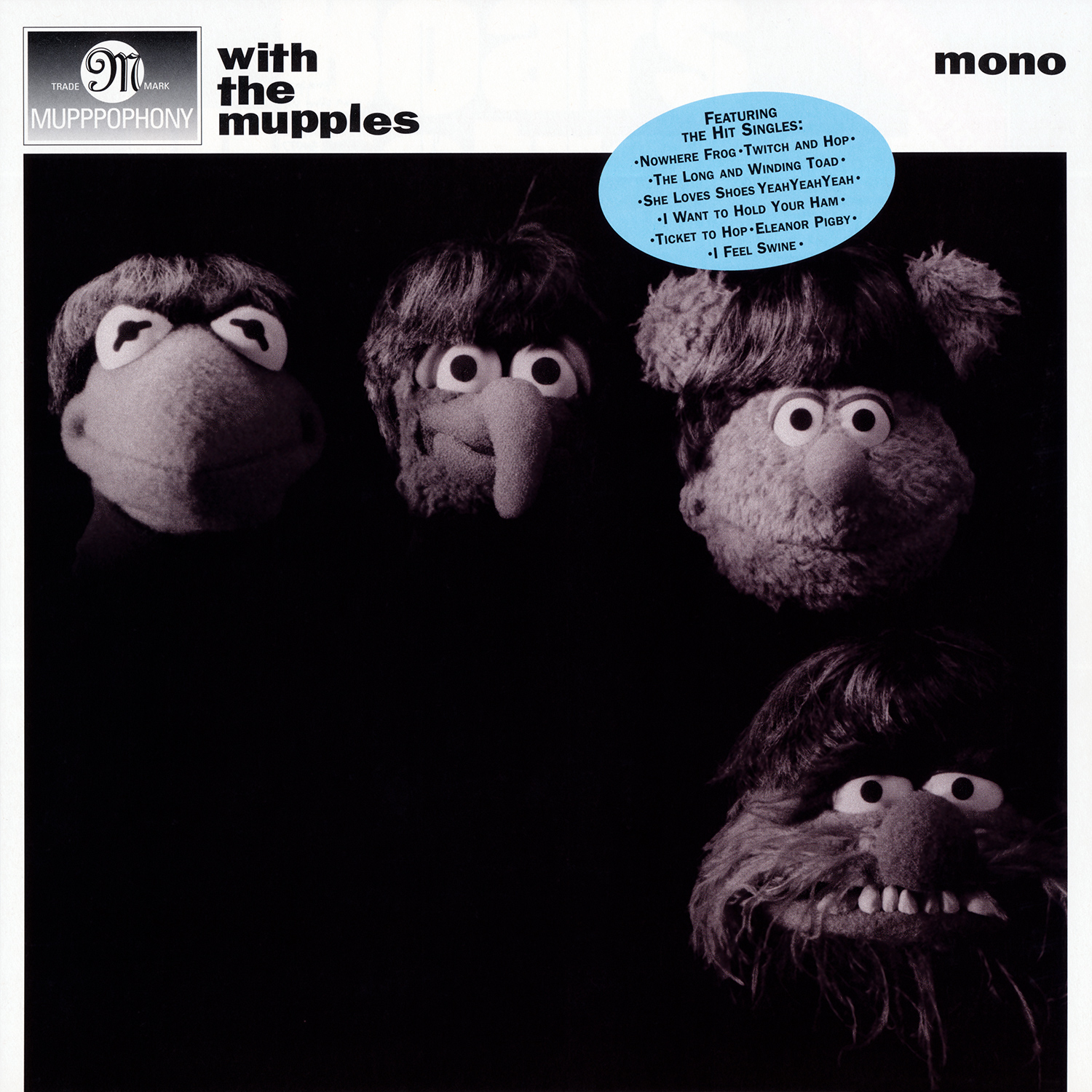
"The Beetles" and Muppet Show Beatles


Sam and I just discovered a compilation of clips in which Muppets sing Beatles songs. My favorites are the ones where "The Beetles" perform on Sesame Street, since I like the puns of "Letter B" ("Let it Be") and "Hey Food" ("Hey Jude"). I also like the "She Loves You" rendition performed by insects in a corn field:


Thursday, March 20, 2014

Choir Music from Lenten Prayer

Earlier this month, my choir performed a concert at the beginning of Lent. There are two songs that I particularly like from our set list and want to remember. I really liked the song "Abendlied" ("Evening Song") by Josef Rheinberger that we sang in German. The text translates: "Abide with us, for evening draws on, and the day is fallen." A .PDF for this piece is available HERE.


The other song that I really liked was a version of "Psalm 23" by Z. Randall Stroope (sheet music available for purchase HERE). This song wasn't performed by my choir in the recent concert, but by the women who are in the Chamber Singers group. Here is a recording that includes oboe and violin for accompaniment, but I also think this piece sounds nice with just piano:


Saturday, January 25, 2014

Pocahontas and Heraclitus


The other day I looked up information about the philosopher Heraclitus. I knew that in The School of Athens Raphael had painted Michelangelo's features on the figure of Heraclitus (see detail above), but I didn't know much about the philosopher himself. I learned that Heraclitus was a pre-Socratic Greek philosopher (or in art history terms, one who lived during the Archaic period). He is best known for emphasizing that the universe is constantly changing, a sentiment which is typified in this phrase attributed to him: "No man steps in the same river twice."


I realized later that same day, when listening to a Disney soundtrack with Sam, that Pocahontas basically sings these same words in her song, "Just Around the Riverbend." The song (see clip HERE) starts with the phrase, "What I love most about rivers is you can't step in the same river twice" (my emphasis). Who knew that Pocahontas, a Native American during the early colonial period, was well versed in ancient Greek philosophy? ;) More seriously, though, I think that this subtle (albeit ahistorical) nod at philosophy does help to emphasize wisdom and perspicacity of Pocahontas's character. (She also has some interesting post-Equal-Rights-Movement sentiment in "Colors of the Wind," which is interesting given that this story is set during the colonial era, but that's a different ahistorical point!)

On a side note, I also wanted to mention that I've decided that Pocahontas's singing voice (sung by Judy Kuhn) is my second favorite voice of Disney female characters. (It is second only to that of Aurora, who has always been my favorite Disney singer). Lately I've had a lot of time to scrutinize the voices of Disney characters with Sam's soundtracks, and many of the female voices are a bit too nasaly or "forward" to my liking. The voices of Rapunzel (from "Tangled") and Meg (from "Hercules") are my least favorite, I think. Pocahontas/Judy Kuhn has a really nice "mix" sound, though, which I like a lot.

Thursday, November 14, 2013

"Bedknobs and Broomsticks" and "The Little Princess"

I have had two songs stuck in my head over the past few days: "Eglantine" and "Old Kent Road." Both of these songs come from movies that I watched a lot as a little girl: Bedknobs and Broomsticks and The Little Princess. I watched both of these movies relatively recently, which I guess explains why I am thinking about these songs. It's been fun to rewatch these films and remember the things that I loved about them as a child. I also made some new connections that I didn't realize before. For example, I didn't realize that the opening credits for Bedknobs and Broomsticks was inspired by the imagery from the Bayeux Tapestry!

The chorus of "Eglantine" from Bedknobs and Broomsticks has been stuck in my head ever since this weekend (although I should note that the version of this song that my family knows is much shorter, I think because our copy of the film was taped off of the TV):


I have also had the "Old Kent Road" song stuck in my head from The Little Princess. This song is played twice in the movie, one when Shirley Temple ("Sara") is living at a private school, and later when she performs the number in the hospital for wounded soldiers. My mom would always point out to me that Sara decided to perform for the soldiers and cheer them up, "even though she didn't feel like it." Perhaps I often said that I "didn't feel like [doing things]" as a young girl?

First scene:


Second scene:


These are the lyrics to "Knocked 'Em in the Old Kent Road":

Last week down our alley came a toff
Nice old geezer with a nasty cough
Sees my missus, takes his topper off
In a very gentlemanly way


"Wot cher!" all the neighbors cried
"Who yer gonna meet, Bill
Have yer bought the street, Bill"?
Laugh! I thought I should've died
Knocked 'em in the Old Kent Road


Every evenin' at the stroke of five
Me and the missus takes a little drive
You'd say, "Wonderful they're still alive"
If you saw that little donkey go


When we starts the blessed donkey stops
He won't move, so out I quickly lops
Pals start whackin' him, when down he drops
Someone says he wasn't made to go


"Wot cher!" all the neighbors cried
"Who yer gonna meet, Bill
Have yer bought the street, Bill"?
Laugh! I thought I should've died
Knocked 'em in the Old Kent Road


When I showed The Little Princess to J a few weeks ago, I also made an interesting connection with the Sara's dream sequence. Part of that dream involves a ballet number, in which the ballerinas come together in a circle and wave their arms (like flower petals). Then, a little ballerina (Shirley Temple) is "born" out of this "flower." You can see this segment at about 5:55 in the clip:


When I watched this sequence recently, I immediately thought of these "ballet classes" that I used to hold for my little sister C and two neighborhood girls. I was probably about eleven or twelve at the time. I didn't really know much about ballet (I had a year of lessons when I was probably seven or eight), but I checked out a whole bunch of books from the library and thought that I knew enough to be an instructor. I would have C and her friends come and practice a routine that I choreographed for "The Waltz of the Flowers" (from The Nutcracker). About thirty seconds into the song, there is a little harp flourish which I envisioned as a time for the dancers to create a similar type of circular "flower" (from which one of the dancers would emerge). At the time, though, I don't think that I realized that I had pulled inspiration from my choreography directly from The Little Princess. That movie was so engrained into my life that I didn't even realize I was referencing it.

A lot of the movies that I watched as a girl were either made in the early-to-mid 20th century. And, for that matter, a lot of the books that I read were from the 19th and early-to-mid 20th centuries. I suppose my mom predisposed me to become an art historian without realizing it: by exposing me to older forms of language and visual culture, I grew to have an affinity for the past and nostalgia (even if it the nostalgia isn't for something I actually experienced).

Wednesday, October 9, 2013

Current Choir Music

I am really enjoying singing in the university choir this quarter, especially since we are preparing for our Christmas concert! Our conductor is really great. She is very organized and has great methods for keeping the choir members on task and prepared to sing. We hardly have any "note plunking" during choir at all. Choir members are required to come to rehearsals already familiar with their singing parts, so we spend our time in rehearsal working on phrasing and dynamics. Our conductor also has a background in vocal pedagogy, so she spends about 20-30 minutes doing various vocal exercises with the choir at the beginning of each rehearsal. She's quite a character, too, so it's fun to work with her.

I already feel like my voice is getting into better shape. I'm glad to learn new vocal exercises and methods from this conductor; I felt like my private vocal lessons as an undergraduate were rather unvaried for several years, since all of my graduate-student teachers were trained in the same BYU vocal method. Some of the suggestions that were given to me never worked, even though they were taught to me over and over for several years. Hopefully these new exercises and tips will help me to work out some of the trouble spots with my voice.

Here are some audio clips of the pieces that we are rehearsing right now:


"Adam Lay YBounden" by Boris Ord (.PDF of sheet music available online)


"In the Bleak Midwinter" by Harold E. Darke (.PDF of sheet music available online)


"Salvation is Created" by Pavel Tschesnokoff (.PDF of sheet music available online)

"Magnificat" by Donald Kendrick (listen and see sheet music online)

"Tyrle, Tyrlow, Tyrle, Tyrlow (So Merrily the Shepherds Began to Blow)" by Healey Willan (You can listen to a preview of this song online)

I keep thinking of my friend ixoj when I am at rehearsal almost every day. I miss singing with her in choirs, and I know that she would love to sing the music that we are singing. Plus, we are also singing the "Hodie" chant from Benjamin Britten's Ceremony of Carols, which specifically makes me miss singing with ixoj in the Christmas Chorus with Martha Sargeant.

Tuesday, July 23, 2013

Paul McCartney at Safeco Field

A few days ago J and I went with our friends JB and M to see Paul McCartney play at Safeco Field. J's parents also went to the concert, but they had seats closer to the stage. We were in the very back of the stadium, on the second to last row!

This was a pretty historic show for a few reasons. For one thing, before this night Safeco Field (where the Mariners play) had never been used for a rock concert. It is obvious that the large venue was a good choice, since the show was sold out.

Also, Paul McCartney played for three hours! He played seven encore numbers! For his encore numbers, he invited members of Nirvana to join him on stage (including Dave Grohl who started the Foo Fighters after Nirvana). Maybe they had such a good time on stage that they just kept playing and playing. J especially loved that Dave Grohl played with McCartney on "Helter Skelter," since Grohl is an heir of the musical tradition that "Helter Skelter" helped to lay.

Paul mentioned a few times that some songs had never been played before in Seattle, which was neat. He said that "For the Benefit of Mr. Kite" had never been performed since the song was released as a recording, so it was really neat to hear that song. He also mentioned that "Blackbird" was written for people in the South during the Civil Rights Movement of the 1960s. I think he mentioned that same thing when we saw him play in Salt Lake, but I forgot that detail. He also played "Here Today," a tribute to John Lennon that Paul wrote after Lennon was killed.

The complete set list from the show and some fan footage is found HERE.

I feel really lucky that now I have gotten to see Paul McCartney perform three times in the past decade (see my thoughts on the previous shows HERE). My in-laws had never seen Paul perform live before this concert, so I'm glad that they got a chance to see him too. Even though Paul is seventy-one years old right now, he still is a great performer. (It was an infinitely better concert than the Jerry Lewis performance that we saw earlier this year, that's for sure!) If I never see Paul perform live again, I will feel like I've had more than my fair share of special opportunities to see him on stage.