Sunday, June 26, 2016

Grace Kelly Films

I've been watching Grace Kelly's films this month, in the order in which they were released, and last night I finished the last one she made before retiring (right before her marriage to Prince Rainier of Monaco). Some of the films I intentionally chose not to watch (and one I couldn't finish because it was so boring), but I will present them in order. In Grace Kelly's short seven-year career, she made eleven films before retiring to marry Prince Rainier of Monaco.

Film #1: Fourteen Hours (1951) - I didn't watch this whole film, because Grace Kelly appears in the film for about two minutes altogether. She appears for a few seconds in the beginning (see 14:12 in this clip), and then later in a scene in which a couple rethinks signing their divorce papers.

Film #2: High Noon (1951) - This film is described as "a Western for people who don't like Westerns." I think that's a pretty accurate description! Grace Kelly's role was a little limited in this film, and as a result she didn't have much opportunity to give a great performance. But I did think she was able to convey some depth to her character in one scene with the actress Katy Jurado:


Film #3: Mogambo (1953) - This was the one film that was so boring that I had to turn it off after about an hour. The movie was very slow paced and the screen writing was just awful. Grace Kelly's performance wasn't that great either, and I think it partly has to do with the poor screenwriting. She also didn't have a lot of substantial lines (at least in the first hour that I saw), and the amorous glances she gave to Clark Gable were silly.

Film #4: Dial M for Murder (1954) - I still feel like Kelly serves as a backdrop and catalyst for action on part of the main (male) characters in the film, but there are some really convincing and intense scenes in this movie. The scissors scene (when Kelly stabs her attacker) is very intense. This scene was filmed over and over in order for Hitchcock to get the effect that he wanted. Not only was this physically and emotionally draining on the actors involved, but Hitchcock himself allegedly lost twenty pounds in filming this scene and trying to get it right.


Film #5: The Bridges at Tokyo-Ri (1954) - I chose not to watch this complete film, partly because Grace Kelly's role was rather minor and partly because I don't really think William Holden is that compelling of an actor. But I did see this amusing clip of the family swimming in a bath house in Japan. I think Kelly gives a good sense of her comedic timing here, even in this short clip.

Film #6: Rear Window (1954) - This is one that I skipped because I've already seen it several times. This is clip of my favorite moments of her from this film. I think she has such an elegant and classy demeanor, with just the right hint of wit:


Film #7: The Country Girl (1954): This is the film for which Grace Kelly won an Academy Award in 1955. I have to say, that I think she really does give one of her finest performances in this movie. I like that she intentionally chose to look dowdy and unattractive - it was even her idea to wear her own glasses in the film. Her acceptance of this role really showed me that she didn't want to be just a glamorous blonde untouchable icon (which Hitchock wanted her to be), but she was willing to embrace a variety of roles, costumes and demeanors. Bing Crosby gives one of the most vulnerable and emotional performances I have ever seen, particularly the scene in his dressing room near the latter part of the film; it definitely is the best acting that I have ever seen him do.

Below is one of the more poignant scenes in the film, although I wish that the Grace Kelly didn't kiss the other male character in this scene - I understand how it is important for the plot but I feel like it ruins the moment:


Film #8: Green Fire (1954): This is one that I intentionally didn't watch because Grace Kelly thought that the film was terrible and she was embarrassed about her participation in it.

Film #9: To Catch a Thief (1955): This is another one of my favorite Grace Kelly films. I like the banter and dialogue that she and Cary Grant parry back and forth, and I learned that a lot of the dialogue between them was improvised. They have great energy and a dynamic that keeps the rhythm of the film more fast-paced and engaging. She also has some really great dresses in this film, particularly her blue evening dress.

Film #10: The Swan (1956) - This movie is entertaining and has some really fun comedic moments (like the curtsy shown about 2:00 in this clip). Grace Kelly's fencing is also pretty impressive, too! Her character is a little reserved and boring at the beginning of the film, but she becomes much more of an interesting character as the film continues. It's also interesting to watch this film, knowing that this is the first film that Alec Guinness made in Hollywood (I think he looks a bit like David Niven in this role as the crown prince).

Film #11: High Society (1956) - This film was made after Grace Kelly's engagement to Prince Rainier. MGM offered her wardrobe from the film as a wedding present, and she even wore her own engagement ring in the film. One favorite moments in this film is when she sings with Bing Crosby. I think she has a nice alto voice and they blend nicely. In Grace Kelly's biography by David Spoto, he writes that her lighter, less trained singing voice is akin to Audrey Hepburn's voice in Moon River, but I disagree. I think that she has a more stable tone and purer sound than Hepburn.


The other scene in this movie that I love is when Grace Kelly tries to be an eccentric wealthy woman when she meets the reporters from Spy magazine. Her sense of comedy is really entertaining and fun:


Later on in life, after becoming the Princess of Monaco, Grace Kelly made another film called Rearranged (1979). She actually plays herself, the Princess of Monaco, in the film. To date, it hasn't been released by Grace Kelly's family, but i hope they decide one day to share this short film with Grace Kelly fans.

Tuesday, June 7, 2016

Memorial Day Weekend: Sun Lakes-Dry Falls

This year I have developed a bad habit of wanting to go on a little family vacation at the last minute. Such was the case with our trip to Portland in January, our snowshoeing trip in February, our trip to the Grand Canyon in April, and now, most recently our camping trip over Memorial Day weekend. I decided that we should go camping just the Thursday night before, and we literally found the last online reservable campsite that was available for Memorial Day weekend. It was in the Sun Lakes-Dry Falls State Park (see map), so fate decided where we were going to go!

We decided to spend one night in Ellensburg, since we knew we would have a late start (I also had to lead a tour at the art museum that weekend). It ended up being a very fun little stay; we slept at a motel and ate dinner in a really cute cafe. I also was glad to have internet access, because I was trying to give students feedback on their essays that were due the following Tuesday!


We arrived at the Sun Lakes-Dry Falls park around lunchtime and set up our tent. We ate lunch at our site, and then went over to the Visitor's Center to learn more about the falls that used to be in this area as a result of Ice Age flooding (coming from the glacial Lake Missoula). We learned at the center that there were several periods of flooding that occurred in the Ice Age. It's impressive to think that these falls originally were four times the size of Niagra Falls! The talus rocks that have built up at the base of these cliffs did not originally exist when the falls formed; the buildup of rock has occurred with weathering and erosion.


In the early afternoon we took a hike along the Deep Lake trail (1.6 miles long). We timed it this way, so that Lucy could have a nap in the backpack (see picture below). It was really fun to go on this trail, because it was so diverse. Although we walked near the shore, sometimes the trail consisted just of piles of rocks. Other times we walked through tall grasses or higher up on cliffs. There wasn't very much shade at all, and the cliffs started to get a little bit high near the end, so we ended up turning around after walking for about a mile down the trail. Maybe one day we will go back to see what lies on top of the cliffs!


Sammy on the hike. This is just about the place where we turned around.

We tried to go swimming in Mirror Lake after our hike, but the water was a little too cold. I think we only stayed for about twenty or thirty minutes! This lake was a short two minute drive (within the park) from our campsite.


 Sam says he likes to go camping so he can eat s'mores. Maybe that's why we all go!

It was really windy during dinnertime and it was also windy during the night. We didn't think about this, but it makes sense that so much wind would blow through the campsite, since it is nestled at the base of two Ice Age cliffs. The wind just funneled through the area. We still were able to make dinner and enjoy some miniature golf at the resort located next to the campsite. I think if we came back to this area, we would want to stay in one of the resort cabins to avoid the wind!


We went boating in a pedal boat on Memorial Day morning. Lucy and I sat in the back to help distribute the weight, but I realized that left J do to most of the pedaling (although Sam helped a little bit). 


This was such a fun weekend. Lucy did great on this camping trip. It took her a while to fall asleep, but she didn't cry or flip out in the tent, so that was good. I realized that this is the first camping trip that she would even remember, even though she was the fourth camping trip she's undergone in her little life.

Friday, May 27, 2016

Celebrities Project: Leonard Bernstein


I originally thought that I was going to dedicate about three weeks to Leonard Bernstein (in order to make up for the extra weeks I spent on Buddy Holly and James Dean), but I realized that there is so much to study with Leonard Bernstein's career and life that it would be better to give him some extra time. So I think that I'm going to now focus on twelve celebrities instead of thirteen this year; so we'll see who gets cut out from the list at the end of the year!

I decided to not read a full biography on Bernstein this month, but I read an online biography and also heard some biographical information in interviews that were included as bonus features with a 2001 dramatized performance of Trouble in Tahiti.  Based on the interview that I read in Dinner With Lenny: The Last Long Interview with Leonard Bernstein by Jonathan Cott, Bernstein seems like a witty intellectual who loved to read and learn. I love that he and his family loved Alice in Wonderland; Bernstein was buried with a copy of the book.


Probably the most impressive thing that I learned about Bernstein was that his widespread acclaim as a conductor began when he was twenty-five years old; he was called to substitute for a guest conductor, Bruno Walter, at Carnegie Hall. Bruno Walter was ill with the flu and so, Bernstein was called upon to come to Carnegie Hall that same day; without any rehearsal, he led a performance that received critical acclaim and attention.

Bernstein was often criticized for being an exhibitionist when he conducted, and in some ways I can see what critics mean. He does seem overly emotive, but I appreciate the sound that he is able to get the orchestra to produce as a result. I'm also impressed with his keen ears and his ability to pick out multiple sounds at the same time, which was especially apparent to me when watching videos of him rehearsing with orchestras.

Since I've already written down some quotes by Bernstein and also highlighted his interest in pop music, I thought I would share just a few more thoughts about Bernstein's own music. When I started listening to Leonard Bernstein's music, my only previous association (that I was aware of) was his music in West Side Story, which is a show that I love. I know that music very well, and I noticed that I kept finding similar intervals, beats, an instruments appearing in his other compositions. (For example, his three dance episodes from the musical On the Town remind me of the dance songs in West Side Story.) I have been trying to find the right way to describe Bernstein's distinctive sound, and I kept thinking of the word "sonorous," but I don't feel like that is descriptive enough, although it is a start. The best thing I have found about Bernstein's musical style is this quote by Kenneth LaFave in Experiencing Leonard Bernstein: A Listener's Companion:
"Bernstein's early scores are a search for a self, for a voice. In a way, Bernstein oeuvre itself will continue this search, turning the quest for a voice into the voice itself. Here is Bernstein's so-called eclecticism...[which] means that, once he got past emulating Scriabin and company, the young composer naturally turned to the music of his time and his life: to Gershwin and Copland, to jazz, to the variety of folk music sources made available by the new technology of sound recording, and last, but far from least, the music of Hebrew worship" (p. 9, source available online).
Here are some of my thoughts on some specific Bernstein compositions that I listened to this past month:

  • Trouble in Tahiti (see clips of the opening scenes and "Island Magic" song): This is an interesting one-act opera. Musically, it is interesting and the chorus and clarinet in the opening scenes remind me more of musical theater. However, I think the seriousness of the subject matter and complexity of (some) of the vocal music elevates this piece to the level of opera. It's a little bit of a downer, actually, since it follows the troubled marriage of two individuals. It seems strange that Bernstein began writing this opera on his honeymoon, but perhaps he wanted to work through personal issues about his parents' troubled relationship before he embarked on a marriage of his own. I also wonder if Leonard's concern 
  • On the Waterfront film score: Leonard Bernstein had some difficulties when working on this project, since he had to keep reminding himself that the dialogue needed to be heard above his music. To be honest, I had to keep reminding myself to listen for music when it came along; the director Kazan used music rather sparingly throughout the film. One place where I noticed the music most was during the "Death in a Dark Alley" scene. There is some discussion of how the music relates to the action of different scenes HERE.
  • I like how diverse Leonard Bernstein was in the types of compositions that he produced. His short piece "I Hate Music" for soprano and piano is really amusing and fun. It also seems like it would be a really challenging piece to sing, because of all of the large intervals.
  • I realized that I already knew one song from Leonard Bernstein's mass, "Simple Song." I really like RenĂ©e Fleming's recording of this song. It is a really pretty piece, and I like the connectedness of the intrumental parts along with the voice. As for the mass itself (see BBC performance), I think some songs are a little to sharp in their beats and chords for mass music.
  • I don't feel like there were tons of revelatory new things that I learned while watching his Omnibus series (and following the shows with the text and transcripts included in The Joy of Music). But I did find the episode on Bach to be very interesting, and I especially liked how Bernstein explained that the the strings which accompany Christ's singing in Saint Matthew's Passion have been described as a "halo."
I feel like I have a better understanding of Bernstein as an individual and conductor now, but also a better sense of him as a composer. I liked the opportunity to listen to various types of the Omnibus series and get to think about music itself, too. This month may end up being the most educational of this whole year, in the sense that Bernstein wanted to educate people (young and old) about music.

Wednesday, May 18, 2016

Leonard Bernstein and Pop Music


Starting about 5:10 in this clip, Leonard Bernstein explains to a group of young people how jazz and pop music often incorporates the Mixolydian mode (which has a lowered seventh note in the scale). Some of his examples include The Kinks' "You Really Got Me" and the Beatles' "Norwegian Wood."

At the beginning of this documentary, Leonard Bernstein explains why he sees value in some of the rock music that is produced at the time. I really like his serious approach to rock music, and especially that he tries to help adults see the value and beauty in the music that teens were listening to during the 1960s. Leonard gives an introduction to pop music for the first twenty minutes of the film, and then the documentary follows the music of a few select singers and bands.

Bernstein starts his analysis of rock music at 4:00 in the clip, with the example of "Good Day Sunshine" by the Beatles. He explains how the music is unorthodox because one measure leaves out a beat (going from four beats to three beats). He continues to analyze the Beatles with "She Said She Said" and then moves on to discuss "Pretty Ballerina" (The Left Banke) and "I'm a Believer" (The Monkees). He analyzes 9:03 and says the Beatles "Got To Get You Into My Life" could have been something written by Shumann because it is so expansive (in range) and romantic (in interval). He then shows example of appealing "untrained voices" by Bob Dylan, the Association, and the Beatles. He also discusses how he likes the eclecticism of rock music, and how it can absorb styles from blues to a Bach trumpet (with the example of "Penny Lane") to a string quartet ("Eleanor Rigby") to Hindu music ("Love You To").

Leonard Bernstein Quotes


This month is Leonard Bernstein Month. As I've been learning about Bernstein's life and work, I have been really struck with his intelligence and the broad range of his interests. The first book I read was Dinner With Lenny: The Last Long Interview with Leonard Bernstein by Jonathan Cott. This interview took place just a year before Bernstein died. It's interesting to read this interview and think about Bernstein's successful life and all that he was able to learn and ponder in the process. Here are some quotes by Bernstein from this interview that I especially like:
  • [Bernstein reminded the interviewer that the word "education" is related to the Latin "educere" - "to bring forth what is within"]. Then Bernstein added, "Though I can't prove it, deep in my heart I know that every person is born with the love of learning. Without exception, every infant studies its toes and fingers, and a child's discovery of his or her voice must be one of the most extraordinary of life's moments." (Dinner With Lenny, p. 17).
  • "Part of the artifice of art is knowing how to steal classy." (Bernstein's response to the interviewer's reference to Picasso's statement that "good artists copy and great ones steal," p. 34).
  • "Anything of a serious nature isn't 'instant' - you can't 'do' the Sistine Chapel in one hour...you have to life on your back and look up at that ceiling and contemplate" (p. 63, 66).
  • "I love learning, I'm an eternal student, and that's maybe why I'm a pretty good teacher" (p. 75).
  • "Advise students [of conducting] to look at the score and make it come alive as if they were the composer. If you can do that, you're a conductor...and if you can't, you're not" (p. 122).

I'm currently reading The Joy of Music by Bernstein (and following select chapters as I watch television broadcasts in the Leonard Bernstein Omnibus collection). Here are two quotes that I especially like:
  • "Music...exists in the medium of time. It is time itself that must be carved up, molded and remolded until it becomes, like a statue, an existing shape and form. . . So the conductor is a kind of sculptor whose element is time instead of marble; and in sculpting it, he must have a superior sense of proportion and relationship" (The Joy of Music, p. 148-149).
  • "...of all the different instruments in this vast, heterogeneous collection called an orchestra, there is none that can compete in any way with the sublime expressivity of the human voice. It is the greatest instrument there is; and when such a voice, or several, or many together, carry the weight of a drama, of a story line, of an emotional situation, then there is nothing in all theater to compare with it for sheer immediacy of impact" (The Joy of Music, p. 271).
Finally, I also want to note a few more great Bernstein quotes that I have come across online and elsewhere:
  • "This will be our reply to violence: to make music more intensely, more beautifully, more devotedly than ever before." (This one is outside of my choir director's office door.) 
  • "Music . . . can name the unnameable and communicate the unknowable."

Thursday, May 5, 2016

Wallace Falls


Last weekend the weather was gorgeous, so we took advantage of the moment and decided to go on a hike. I found the Wallace Falls hike online more-so through a process of elimination, since we have hiked most of the kid-friendly waterfall hikes in the area. But now I wish that we had discovered the Wallace Falls State Park earlier! It is well maintained and the trail to Wallace Falls affords a variety of different views.

The beginning of the hike is placed in a wide area that has been cleared out for power lines. There are some lovely views of the Cascades here: Mount Persis is in the far right (elevation 5452 ft.), Mount Index is the next peak to the left (5979 ft.), and the smaller peak above Sam's head is Philadelphia Mountain (4257 ft.). The smallest peak in the far distance on the right is Mt. Baring (which is actually the largest peak in this view, at 6125 ft.).

This was an unusual hike for our family, because we didn't complete all of it together. The parking lot was full by the trailhead, so J had to drop the rest of off and find a parking spot about 3/4 of a mile away. I started down the trail with the kids (see first photo), and J hurried to catch up with us about 15-20 minutes later. Then, when we were about half a mile from the Lower Falls viewpoint, J and Sam decided to stop (J's leg was bothering him from going running the day before). Lucy and I continued on, but Lucy ended up falling asleep in the backpack a few minutes before we got to the waterfall. I was the last one standing by the time the waterfall was in sight!

We walked a little ways along the Small Falls turnoff: it is a short loop trail off of the main trail to Wallace Falls.


At the Lower Falls of Wallace Falls! You can see the greater waterfall cascading down in the distance on the right, too. A good view of both the Lower and Upper Falls can be seen HERE.

This is the rock that J and Sam sat on while they waited for me and Lucy to finish our trek up to the falls. J said that Sam wanted to just chat about Minecraft, but J kept creatively steering the discussion so that they could also talk about the beautiful surroundings in the forest.

I hope we can go back to this trail another time, not only so J and Sam can see the falls in person, but also so we can hike further. I turned around at the Lower Falls (which was two miles from the trailhead), but one day I would like to go farther to Middle Falls (about 2.3 miles from the trailhead) and the Upper Falls (about 2.8 miles from the trailhead). One day, when the kids are older and can handle hiking or biking longer distances, it would be fun to go to Wallace Lake at the park, too.

Tuesday, April 19, 2016

Grandma S Memories

Taken last Christmas 2015

As I was leaving for work this morning, my dad called to say that my Grandma S had passed away. She has been doing poorly for the past several weeks, so this isn't a surprise, but it is still sad. She will be missed!

I have a lot of favorite memories with Grandma. My favorite memories are actually moments when we got to have one-on-one visits together. The most recent one was a few years ago, during the fall of 2011. I had flown to Utah by myself, so I could speak at a conference at BYU, and I got to have a special visit with Grandma in her living room that same day. We chatted about a lot of things, but I particularly remember her chatting about my dad and expressing how she loves and understands him as a person. I think that is the last time that I was able to visit with her in her own house, which is why the memory stands out. I have distinct memories of other special visits too: I remember getting to have a sleepover in her basement when I was a teenager. I think that I was attending some type of summer camp at BYU for a day or two, and I got to stay with Grandma and Grandpa while I was in Utah Valley. That sleepover allowed me to have a special one-on-one visit with Grandma too: she took me around the house and showed me some special things that she inherited from different family members, and I thought that was really neat.

I distinctly remember going to visit Grandma and Grandpa at their home in New Orleans. I actually got some type of stomach bug while we were there, and I remember Grandma helping to take care of me. She even turned Mary Martin's "Peter Pan" on the television, so I could rest on the couch with a little bit of distraction. I really felt her love during that time, and I always think of Grandma when I think of that film adaption of "Peter Pan."

A lot of my memories of Grandma revolve around music. I have happy memories of getting to play piano duets with Grandma, or just having her listen while I played a song that I recently learned. I also remember going through her record collection with her, too. She told me about some of the different singers and albums, and even about what was happening in her life when she bought different records. Grandma and Grandpa were also really wonderful at supporting my musical activities, and I especially remember them coming to my choir concerts at BYU.

I will remember my grandma as a passionate, loving, outgoing person who enjoyed being involved in her family members' lives and her church community. I will remember her as a storyteller; she would often tell  her grandkids stories about her life or stories from the lives of her family members. She would tell us stories about her locket which was dented (I think it used to be Grammie's locket, and Grammie would bite on it as a child). I liked hearing stories about when she grew up in Kalispell, or when she moved to Minnesota with Grandpa and her children. She often liked to tell me and my siblings about how once, in 1955, the airlines workers at the new Denver airport stopped the airplane on the runway so that my grandma could board with my dad (who was just a few weeks old) and my aunt (who was a toddler). 

I will cherish the memory of our last telephone conversation, which was on her birthday this year, when she turned 89. I was surprised that Grandma answered the phone, since she didn't always get to her phone in time and I usually couldn't reach her that way. But she answered on her birthday and we had a nice chat. As usual, she was loving and sweet. We talked about Kalispell and about some of her relatives that used to live in Washington State. I will miss things about calling her, especially to hear her say, "Yes, dear!" after I would identify myself on the phone.

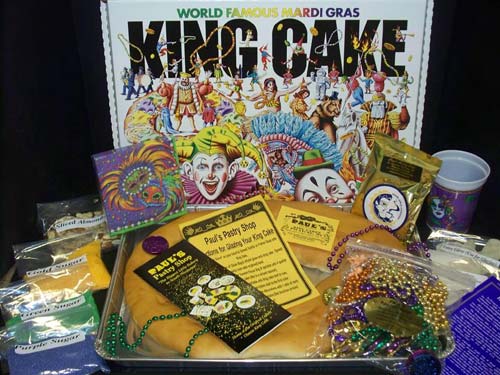
I will remember her as the grandma who had a marble run toy, a gumball machine, and the softest toilet paper in her bathroom. (My cousin A and I used to joke that it had to be at least four-ply!) I will remember her as the grandma who mailed us Mardi Gras beads and a King Cake, as well as a the Cajun Night Before Christmas book. She was also a maker and a doer: I have a cross-stitched image of my name that she made when I was a young girl, and my family has a cross-stitched display of our family members represented by various bears (which she made in the '90s, probably before my sister E was born). Grandma also designed fancy birthday banners for her grandchildren with her computer. In retrospect, I'm especially nostalgic for there, since they were made with the classic 1990s home computer printer. We would string these banners across the mantle of our living room, whenever it was someone's birthday.

I will remember her as the grandma who visited my third-grade class: Grandma was tickled that my teacher, Mrs. Suer, said that she could tell that Grandma and I were related to each other because we looked alike with our blue eyes. And speaking of us looking alike, Grandma also kept a photo of us that Grandpa took, which was from more or less this same time - I was probably around nine or ten. The photo is taken from behind, and we are turned away from the camera: Grandma and I both are leaning over and scrubbing out the bottom of a bathtub together, although Grandma is wearing green pants and I don't have any pants on (I think I was getting ready for a bath). I think Grandpa took the picture because of the cute compositional similarity, but Grandma used to joke with me that maybe there is a familial resemblance with our backsides, too!

I will remember my grandma in her role as a great-grandma: she always wanted to make sure that her great-grandchildren received a gingerbread house at Christmastime. When we visited her last December, the first thing she said to Sam was, "Hello, Sam! I'm the Gingerbread Grandma!"


I feel lucky to have known grandma and to have been influenced by her. More than anything, I will remember our love for each other. I hope to have a lasting influence on my family in the way that grandma had one on me.